



What's Happening?
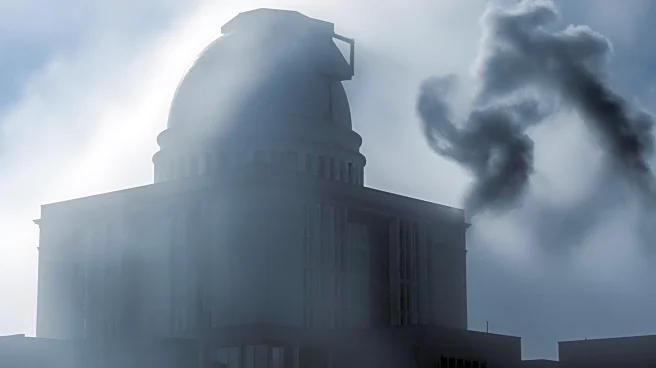
The Trump administration has announced plans to dismantle the National Center for Atmospheric Research (NCAR) in Boulder, Colorado. The decision, announced by Russ Vought, director of the White House Office of Management and Budget, labels NCAR as a source
of 'climate alarmism.' The center, established in 1960, is a key hub for weather research and employs around 830 people. The announcement has faced backlash from Colorado's leaders, who argue that dismantling NCAR threatens public safety and scientific progress. The National Science Foundation is reviewing NCAR's structure, and there are concerns about the potential loss of scientific capabilities.
Why It's Important?
The dismantling of NCAR could have far-reaching effects on climate research and public safety. As a leading institution in atmospheric science, NCAR's closure may hinder advancements in weather prediction and climate understanding. The move is seen as part of a broader effort to reduce federal support for climate science, which could impact the U.S.'s ability to respond to climate change. The decision also raises concerns about political motivations influencing scientific research and could lead to a loss of international competitiveness in scientific discovery.
What's Next?
The decision to dismantle NCAR is likely to face legal and political challenges. Colorado's leaders and scientific communities may seek to block the move through legislative or judicial means. The National Science Foundation's review could result in alternative management structures for NCAR's resources. The outcome of these efforts will be crucial in determining the future of atmospheric research in the U.S. and the role of federal support in scientific endeavors.