



What's Happening?
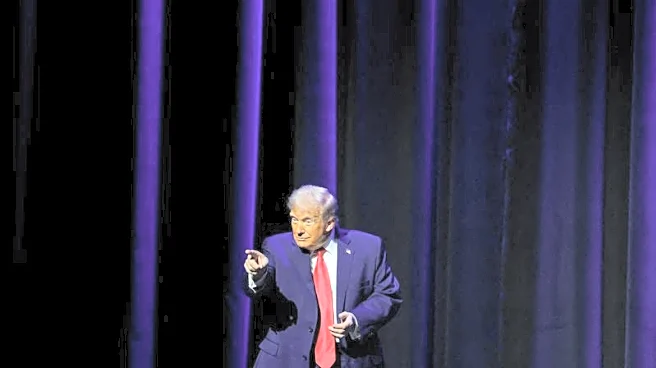
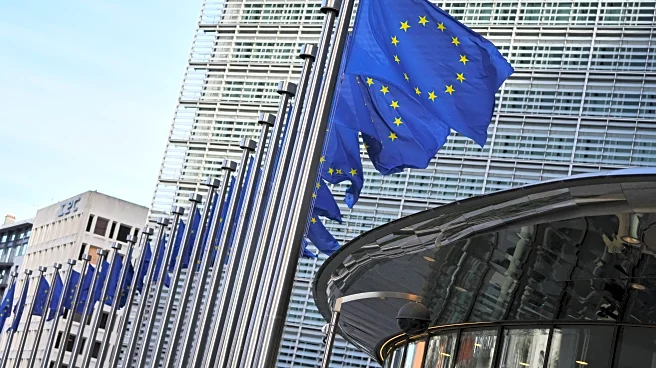
European governments are attempting to diplomatically resolve tensions with President Trump, who has threatened to impose additional tariffs on six EU countries, the UK, and Norway. The tariffs are a response to these countries' opposition to the U.S.
acquisition of Greenland, a semi-autonomous territory of Denmark. The EU is cautious about escalating the situation, as there is uncertainty about whether President Trump will follow through on his threats. The EU's strategy involves engaging in dialogue at the World Economic Forum in Davos and considering the use of the Anti-Coercion Instrument, although this option faces opposition within the EU.
Why It's Important?
The potential imposition of tariffs by President Trump represents a significant challenge to transatlantic relations, which have already been strained. Such tariffs could have economic repercussions for both the EU and the U.S., affecting trade and economic growth. The EU's approach to de-escalate tensions reflects a desire to maintain stable economic relations and avoid further deterioration of diplomatic ties. The situation underscores the complexities of international trade negotiations and the impact of geopolitical decisions on global markets.
What's Next?
The EU will continue to engage in diplomatic efforts to prevent the implementation of tariffs. An emergency EU leaders' summit is scheduled to assess the situation and determine the next steps. The outcome of discussions at Davos will be crucial in shaping the EU's response. The potential use of the Anti-Coercion Instrument remains a contentious issue, and its deployment will depend on the evolving diplomatic landscape. The EU's ability to navigate this crisis will have implications for its future trade policies and relations with the U.S.