


What's Happening?
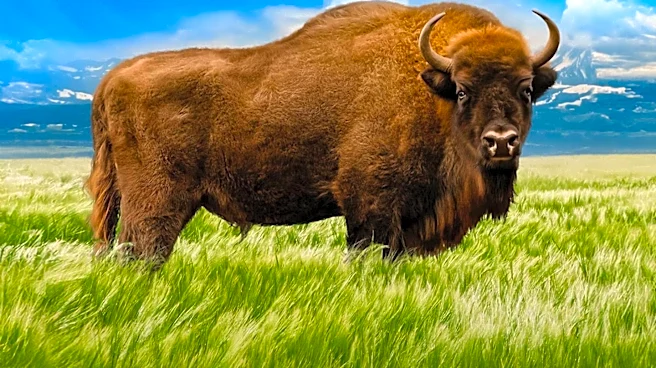
A federal judge has ruled that American Prairie can continue grazing bison on three federal grazing allotments, temporarily blocking a Bureau of Land Management (BLM) rule that would have removed approximately 900 bison. This decision by Judge Brian Morris
allows the bison to remain while a federal lawsuit, filed by American Prairie against the BLM and the Department of the Interior, proceeds. The BLM had previously canceled six of American Prairie's permits, covering over 60,000 acres, based on a new interpretation of the federal Taylor Grazing Act, which required livestock to be 'production-oriented.' Montana's all-Republican federal delegation and statewide Republican officials, including Governor Greg Gianforte, have opposed bison grazing on federal land, arguing that American Prairie's mission conflicts with the state's economy and removes land from agricultural use.
Why It's Important?
This ruling is significant for conservation efforts and land use policy in Montana, particularly regarding the reintroduction of bison to their native habitats. The judge's decision challenges the BLM's interpretation of 'livestock' under the Taylor Grazing Act, asserting that conservation and other values can coexist with production-oriented activities. This has broader implications for how federal lands are managed and the types of activities permitted on them. For American Prairie, the ruling is a crucial victory, allowing them to maintain their bison herd and continue their conservation work. Conversely, it represents a setback for Montana's political leadership, who have consistently advocated against the bison's presence on federal grazing lands, citing economic concerns for the state's agricultural sector. The ongoing legal battle highlights the tension between conservation goals and traditional agricultural interests.
What's Next?
The federal lawsuit between American Prairie and the Bureau of Land Management and the Department of the Interior is still pending, meaning this ruling is a temporary injunction. The court has yet to make a final decision on the core legal arguments regarding the definition of 'livestock' and the interpretation of the Taylor Grazing Act. The Montana Attorney General's Office has declined to comment on the ruling, indicating that further legal actions or appeals may be considered by the state and federal defendants. American Prairie will continue to graze bison on the three allotments, but the long-term status of their grazing permits and the future of bison reintroduction on federal lands in Montana remain subject to the outcome of the ongoing litigation. The ruling did not address three other grazing allotments that American Prairie had previously agreed with the BLM to use but are not currently utilized for bison grazing.
Beyond the Headlines
The legal dispute over bison grazing on federal land in Montana delves into fundamental questions about land stewardship, ecological restoration, and the balance between economic development and environmental conservation. The judge's interpretation that livestock operations do not need to focus exclusively on production opens a precedent for integrating conservation, range improvement, and preservation into federal land use policies. This could influence future decisions regarding wildlife management and the reintroduction of native species across the United States. The conflict also underscores the cultural and historical significance of bison in the American West and the ongoing debate about their role in modern landscapes. The outcome of this lawsuit could shape the future of conservation efforts and agricultural practices on federal lands for years to come.