







What's Happening?
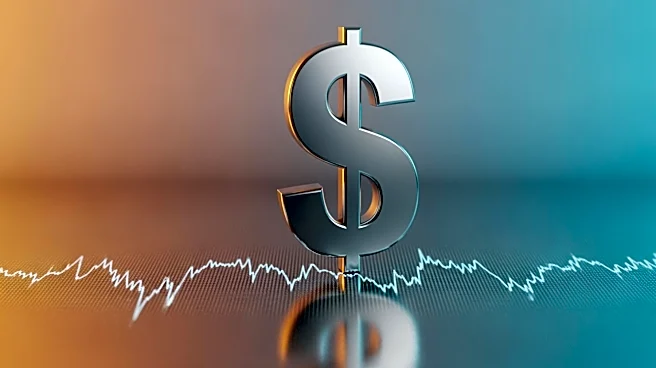
The U.S. dollar experienced fluctuations as investors reacted to new U.S. military strikes in the Middle East and rising inflation concerns. The dollar's instability is attributed to the ongoing conflict between the U.S. and Iran, which has led to increased
geopolitical tensions and uncertainty in the currency markets. Additionally, the U.S. Consumer Price Index (CPI) rose by 4.2% in May, marking the highest annual increase in three years, driven by surging energy prices. This inflationary pressure has heightened speculation about the Federal Reserve's future monetary policy actions, with traders anticipating a potential rate hike by December.
Why It's Important?
The dollar's volatility highlights the impact of geopolitical events on global financial markets and the interconnectedness of economic policies. The rising inflation in the U.S. poses a challenge for the Federal Reserve as it balances the need to control inflation with supporting economic growth. The potential for a rate hike by the Fed could influence borrowing costs and investment decisions, affecting various sectors of the economy. Additionally, the ongoing Middle East tensions contribute to market uncertainty, impacting oil prices and global trade dynamics. The situation underscores the importance of stable geopolitical relations for economic stability.
What's Next?
Investors and market analysts will continue to monitor developments in the Middle East and their impact on global markets. The Federal Reserve's upcoming meetings will be closely watched for any indications of changes in monetary policy, particularly in response to inflationary pressures. The ECB's policy decisions and communication will also be of interest, as they may influence global economic trends. The resolution of geopolitical tensions and the stabilization of energy prices will be critical factors in determining the future trajectory of the dollar and broader economic conditions.