







What's Happening?
The Atlantic States Marine Fisheries Commission (ASMFC) has approved significant reductions in the menhaden harvest cap for the Chesapeake Bay. At its annual meetings, the commission voted to decrease the reduction fishery cap by approximately one-third
over the next two years. The current catch limit of 51,000 metric tons will be reduced to 37,123 metric tons for 2027 and further to 33,847 metric tons by 2028. These changes, which are scheduled to take effect on May 1, 2027, were initiated due to concerns about harvest and catch declines in recent years. The board also voted to reduce the coastwide total allowable catch (TAC) from 186,840 metric tons to 155,000 metric tons by 2028. Virginia voted against the measure, which passed 14-2.
Why It's Important?
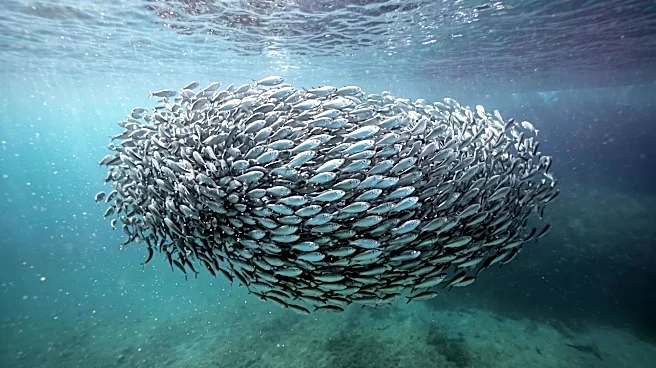
This decision by the ASMFC is critical for the ecological health of the Chesapeake Bay and the broader Atlantic coast. Menhaden are a vital forage fish, serving as a primary food source for numerous wildlife species, including striped bass, osprey, and bluefish. Environmental groups like the Chesapeake Bay Foundation (CBF) have advocated for these reductions, citing declining menhaden populations and their impact on predators. The CBF interprets lower catches by fisheries as a sign that menhaden are becoming scarcer. Conversely, the Menhaden Fisheries Coalition argues that menhaden are not overfished and that population declines are due to natural mortality, such as predation. The reductions will likely impact the fishing industry, potentially leading to business challenges and job losses, as expressed by the United Food and Commercial Workers Local 400 Union.
What's Next?
The new harvest limits for menhaden in the Chesapeake Bay and along the Atlantic coast will take effect on May 1, 2027. Environmental organizations, such as the Chesapeake Bay Foundation, while acknowledging the progress, indicate that they will continue to advocate for stronger protections and more science-based management, particularly regarding the coast-wide limits. The fishing industry and related businesses, represented by groups like the Menhaden Fisheries Coalition, will likely monitor the impact of these reductions on their operations and employment. Further research into menhaden populations and their ecosystem role will be crucial in informing future regulatory decisions, with calls for such research to be rigorous, transparent, and free from undue industry influence.
Beyond the Headlines
The debate over menhaden harvest limits highlights the ongoing tension between economic interests and environmental conservation in fisheries management. This situation underscores the complexity of ecosystem-based management, where decisions must balance the needs of a commercial industry with the ecological role of a species within a broader food web. The differing interpretations of scientific data by environmental groups and industry stakeholders also reveal challenges in achieving consensus on resource management. This case could set a precedent for how regulatory bodies approach similar conflicts in other fisheries, emphasizing the importance of robust scientific assessment and stakeholder engagement in policy-making.