





What's Happening?
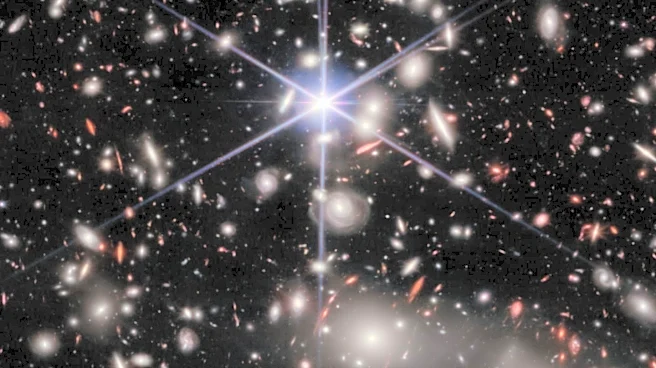
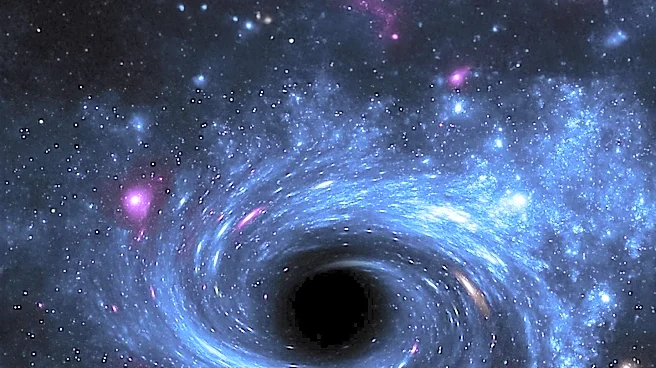
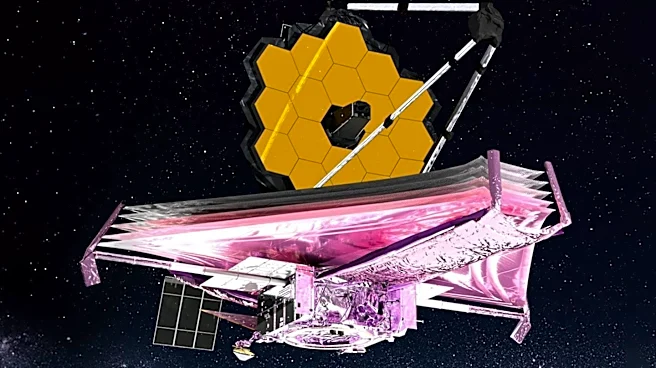
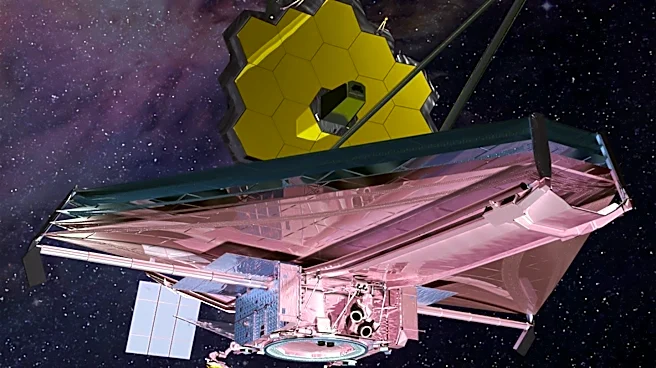
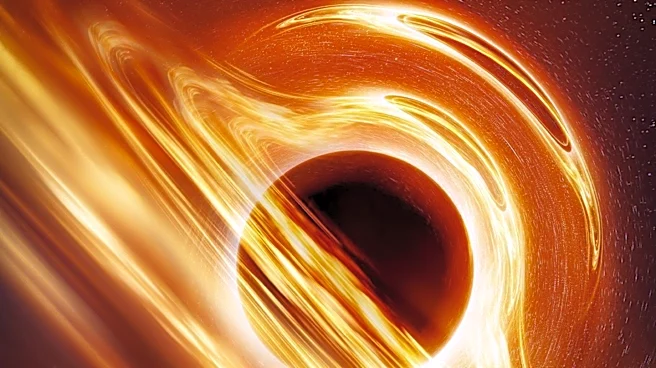
NASA's James Webb Space Telescope (JWST) is significantly enhancing astronomers' ability to study supermassive black holes, particularly those in the early universe. The telescope's sensitive near- and mid-infrared instruments allow for detailed characterization
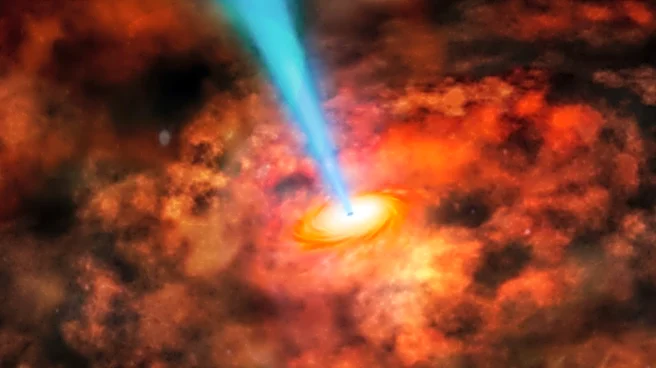
of black hole properties previously unobservable, challenging existing theories about their evolution. A key discovery by Webb is a new class of objects dubbed 'little red dots' (LRDs), which are compact and red in appearance and found predominantly in the early universe, as early as 600 million years after the Big Bang. These LRDs are unlike anything observed before, and astronomers are investigating whether they are active galactic nuclei (AGN) or other exotic types of celestial objects. The study of these objects is crucial for understanding how the first supermassive black holes formed and how they co-evolved with their host galaxies. Webb's observations are providing new data to explore theories about black hole 'seeds'—the initial black holes that grew into supermassive ones, which could be either 'light seeds' formed from massive stars or 'heavy seeds' from direct collapse or runaway stellar collisions.
Why It's Important?
The insights gained from the Webb Telescope are critical for refining our understanding of cosmic evolution. By observing black holes and galaxies in the early universe, astronomers can piece together how these fundamental structures developed over billions of years. The discovery of 'little red dots' could revolutionize several astronomical fields. If LRDs are indeed a type of AGN, it suggests a much higher prevalence of active black holes in the early universe than previously predicted. Conversely, if they are exotic stars, it would alter theories on starlight emission from small areas, impacting early universe astrophysics. This research directly influences our comprehension of how galaxies, including our own Milky Way, formed and evolved, as the growth of black holes is intrinsically linked to the growth of their host galaxies. Understanding these processes helps explain the universe's current structure and composition, providing foundational knowledge for future space exploration and theoretical physics.
What's Next?
Astronomers will continue to utilize the Webb Telescope to further investigate 'little red dots' and other early universe phenomena. Future research will focus on determining the true nature of LRDs—whether they are active supermassive black holes or other celestial bodies—by comparing their characteristics with known AGN and other theoretical objects. This will involve more detailed spectroscopic analysis to understand their composition, velocity, and energy output. Complementary data from other observatories, such as NASA's Nancy Grace Roman Space Telescope, will be crucial. Roman will survey vast areas of the sky to identify thousands of supermassive black holes in the early universe, providing more targets for Webb to study in detail. This collaborative approach aims to develop a more robust set of parameters for classifying objects like LRDs and to deepen our understanding of black hole evolution and their connection to galaxy formation across cosmic time.
Beyond the Headlines
The ongoing discoveries by the Webb Telescope highlight the dynamic and evolving nature of scientific understanding. The existence of 'little red dots' underscores how much remains unknown about the universe's earliest phases and challenges established models of cosmic evolution. This research pushes the boundaries of astrophysics, prompting scientists to reconsider fundamental assumptions about star formation, galaxy growth, and the prevalence of black holes. The ethical implications of such profound discoveries often revolve around the pursuit of knowledge for its own sake and the allocation of resources to large-scale scientific endeavors. Legally, international collaborations in space exploration, like those involving NASA, ESA, and CSA for the Webb Telescope, set precedents for global scientific cooperation. Culturally, these findings inspire awe and curiosity about our place in the cosmos, influencing public perception of science and encouraging future generations to pursue careers in STEM fields.