




What's Happening?
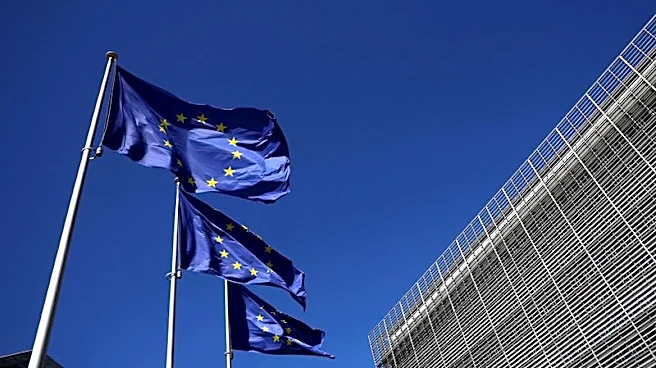
In a retaliatory move, China has imposed export controls on 14 European entities following the European Union's sanctions against 14 Chinese enterprises. The EU's sanctions, part of its ongoing efforts to penalize Russia, targeted companies believed to be supplying
dual-use goods to Russia. In response, China's Ministry of Commerce announced that Chinese companies are now prohibited from exporting dual-use items to the affected European organizations. These items, which can be used for both civilian and military purposes, are crucial for various industries. The European companies impacted include Czech vehicle manufacturer Tatra Trucks and Italian electric motor maker Lafert SpA. This development marks a significant escalation in the trade tensions between China and the EU.
Why It's Important?
The imposition of export controls by China is a strategic move that underscores the complex interplay of international trade and geopolitics. By targeting European companies, China is signaling its willingness to use trade policy as a tool to counteract international sanctions. This action could have significant implications for the affected industries, particularly those reliant on dual-use goods for their operations. The broader impact on global supply chains could lead to increased costs and operational challenges for companies worldwide. Additionally, this development highlights the potential for further escalation in trade tensions between major global economies, which could have far-reaching consequences for international economic stability.
What's Next?
As the trade tensions between China and the EU continue to escalate, both sides may consider additional measures to protect their economic interests. European companies affected by China's export controls may need to explore alternative supply chains or adjust their business strategies to mitigate the impact. The EU, in turn, may respond with further sanctions or trade restrictions, potentially leading to a prolonged period of economic uncertainty. Stakeholders in the affected industries will need to closely monitor the situation and prepare for potential disruptions. The international community will also be watching these developments, as they could influence global trade dynamics and international relations.