
What's Happening?
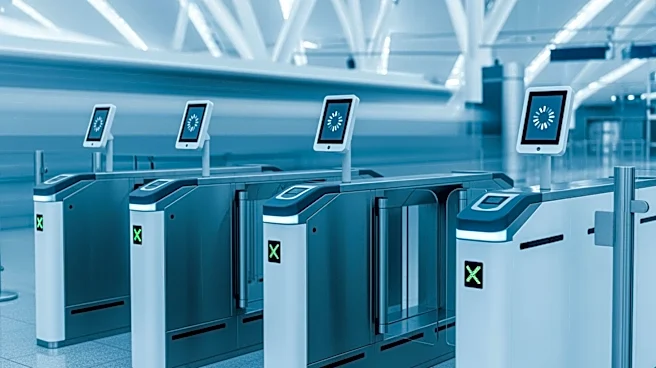
The European Union has fully implemented a new biometric Entry/Exit System (EES) at all border crossings in the Schengen Area, replacing manual passport stamps with face and fingerprint scans. This system,
aimed at streamlining and securing border crossings for non-EU nationals, has led to significant delays and missed connections for travelers. Reports indicate that travelers, particularly from the UK, have experienced waits of up to six hours at airports in popular destinations like Italy, Portugal, and Spain. The World Travel & Tourism Council (WTTC) has expressed concerns that these delays could deter travelers from visiting Europe, potentially resulting in a loss of up to 41 million visitor arrivals and $45.4 billion in spending.
Why It's Important?
The introduction of the biometric EES represents a significant shift in how border security is managed in Europe, with implications for international travel and tourism. The delays and confusion experienced by travelers highlight the challenges of implementing new technology on a large scale. If these issues persist, they could have a substantial economic impact, reducing tourism revenue and affecting businesses reliant on international visitors. The situation underscores the need for effective communication and operational readiness to ensure a smooth transition to the new system. Stakeholders, including governments and the travel industry, must collaborate to address these challenges and improve the traveler experience.
What's Next?
Efforts to address the current issues with the EES are likely to focus on enhancing digital pre-registration tools, improving communication with travelers, and ensuring that biometric kiosks are fully operational. The European Commission and border authorities may need to work closely with the travel and tourism sector to refine the system and minimize disruptions. As the system stabilizes, it could set a precedent for other regions considering similar technological upgrades to border security. Monitoring the system's performance and gathering feedback from travelers will be crucial in making necessary adjustments and ensuring the system's long-term success.