








What's Happening?
The Eastern Indigo snake, recognized as Alabama's longest native snake and the longest native snake in North America, is currently listed as a federally threatened species. These non-venomous snakes can reach lengths of up to 9 feet, with the longest recorded
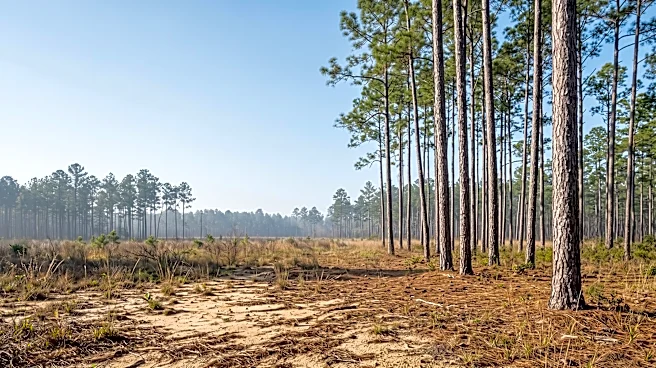
in Alabama measuring 8 feet 6 inches. They are characterized by their glossy, deep blue-black scales and a reddish-orange tint on their chin and throat. Despite their size, Eastern Indigo snakes are generally non-aggressive towards humans and are not considered dangerous. They are protected under the Endangered Species Act federally and by non-game wildlife regulations in Alabama, making it illegal to harm, capture, or kill them. The species primarily inhabits longleaf pine forests in Alabama's southern Coastal Plain, favoring dry, sandy ridges and often utilizing gopher tortoise burrows for shelter. Researchers in the 1980s released these snakes into seven Alabama counties, and while some were recaptured, indicating survival, wildlife experts need to re-evaluate current population statuses.
Why It's Important?
The threatened status of the Eastern Indigo snake underscores critical ecological concerns within the U.S., particularly in Alabama. As a top predator, especially of venomous snakes like the Eastern Diamondback Rattlesnake, the Eastern Indigo plays a vital role in maintaining the balance of its ecosystem. Its decline can lead to an increase in populations of other snake species, potentially impacting local biodiversity and human-wildlife interactions. The protection under federal and state laws highlights the government's commitment to conserving endangered species and their habitats, which often face threats from habitat loss, fragmentation, and human encroachment. The snake's reliance on longleaf pine forests and gopher tortoise burrows also emphasizes the interconnectedness of species and the importance of preserving entire ecosystems rather than individual species in isolation. Conservation efforts for the Eastern Indigo snake contribute to broader environmental health and biodiversity goals, benefiting numerous other species that share its habitat.
What's Next?
Wildlife experts in Alabama are tasked with revisiting sites where Eastern Indigo snakes were previously restocked to determine the current status of their populations. This ongoing monitoring is crucial for assessing the effectiveness of past conservation efforts and informing future strategies. Continued research into their habitat needs, reproductive success, and threats will be essential for developing targeted conservation plans. Public awareness campaigns may also be necessary to educate residents about the snake's non-venomous nature and protected status, reducing instances of accidental harm. Collaborative efforts between state and federal agencies, conservation organizations, and private landowners will be vital to ensure the long-term survival and recovery of the Eastern Indigo snake, potentially involving habitat restoration projects and land management practices that support longleaf pine ecosystems and gopher tortoise populations.
Beyond the Headlines
The plight of the Eastern Indigo snake reflects a larger narrative of biodiversity loss and the challenges of conservation in the face of human development. The snake's role as a predator of venomous species offers a natural form of pest control, providing an ecological service that benefits both the environment and potentially human safety. Its dependence on gopher tortoise burrows illustrates a fascinating example of commensalism, where one species benefits from another without causing harm, highlighting the intricate web of life in natural ecosystems. The legal protections afforded to the Eastern Indigo snake also raise ethical questions about humanity's responsibility to protect vulnerable species and the intrinsic value of biodiversity. The ongoing efforts to conserve this species are not just about saving a single snake but about preserving the health and resilience of an entire ecological community, serving as a barometer for the overall health of the longleaf pine ecosystem in the southeastern U.S.