




What's Happening?
California has implemented the Plastic Pollution Prevention and Packaging Producer Responsibility Act, spearheaded by State Senator Ben Allen. This new legislation, which came into effect in May, aims to significantly reduce plastic waste within the state.
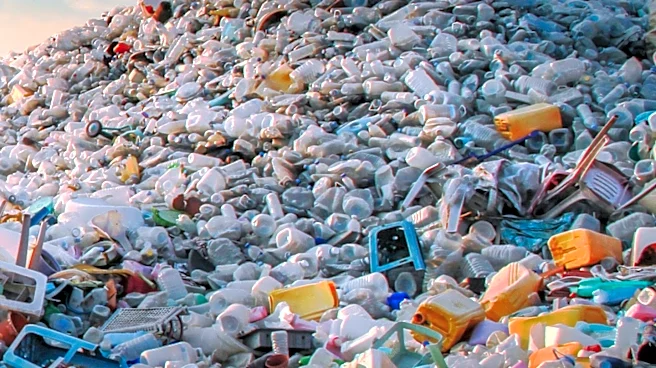
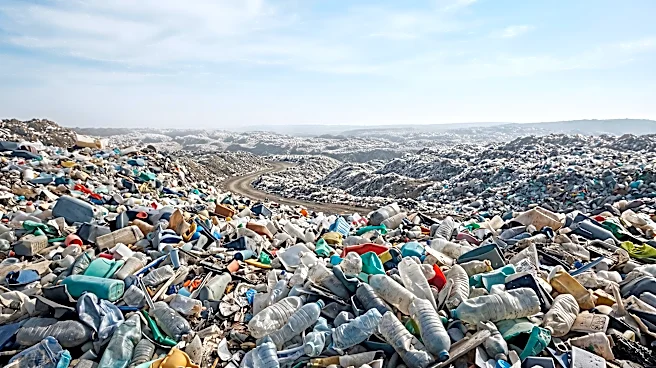
According to a study from last year, Californians discarded approximately 8.5 million tons of single-use packaging and food ware in 2024, contributing to a total of 40 million tons of material sent to landfills. The Act is projected to prevent roughly 21% of this waste. Key provisions of the law mandate that by 2032, 100% of single-use packaging and plastic food-service ware must be recyclable or compostable. Additionally, there must be a 25% overall reduction in the use of plastic packaging by the same deadline. The plastics and packaging industry is also required to contribute $500 million annually for the next decade, totaling $5 billion, to help mitigate pollution in disadvantaged communities.
Why It's Important?
This legislation represents a significant step in addressing plastic pollution and its environmental impact in California, a state that generates substantial waste. By setting ambitious targets for recycling, composting, and reduction of single-use plastics, the Act aims to shift the burden of waste management and pollution mitigation onto producers. The financial contribution from the plastics and packaging industry, totaling $5 billion over ten years, is crucial for funding cleanup efforts and supporting communities disproportionately affected by pollution. This approach could serve as a model for other states or even national policy, demonstrating a comprehensive strategy that combines regulatory mandates with financial accountability. The focus on disadvantaged communities also highlights an effort to address environmental justice concerns, ensuring that the benefits of reduced pollution are equitably distributed.
What's Next?
The immediate next steps involve the plastics and packaging industry beginning its annual $500 million contributions and initiating the necessary changes to meet the 2032 targets. Businesses will need to innovate and adapt their packaging and product designs to comply with the recycling, composting, and reduction mandates. State agencies will likely be tasked with monitoring compliance and tracking progress towards the established goals. There may be ongoing discussions and adjustments as the implementation progresses, particularly regarding the feasibility and economic impact on various industries. The success of this Act could influence future environmental legislation in California and potentially inspire similar initiatives in other U.S. states grappling with plastic waste challenges.
Beyond the Headlines
The California Plastic Pollution Prevention and Packaging Producer Responsibility Act reflects a broader societal shift towards greater environmental accountability and sustainable consumption. It challenges the traditional linear economy model of 'take-make-dispose' by pushing industries towards a more circular approach where materials are reused or recycled. This could lead to significant innovation in sustainable materials science and manufacturing processes. Ethically, the Act underscores the principle that producers should bear responsibility for the entire lifecycle of their products, including their end-of-life impact. Culturally, it could foster increased public awareness and demand for eco-friendly products, influencing consumer behavior and market trends beyond California's borders. The long-term implications include not only a cleaner environment but also potential economic benefits from a burgeoning green industry sector.