





What's Happening?
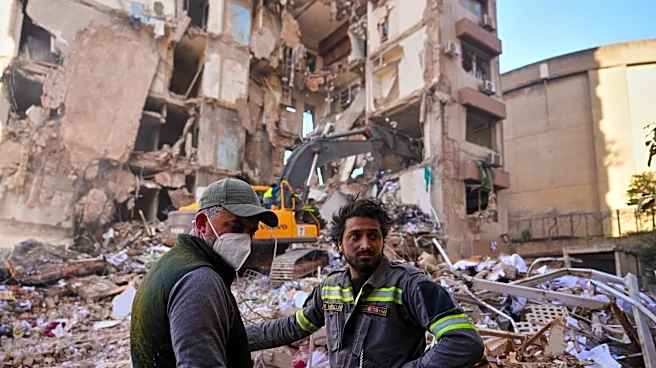
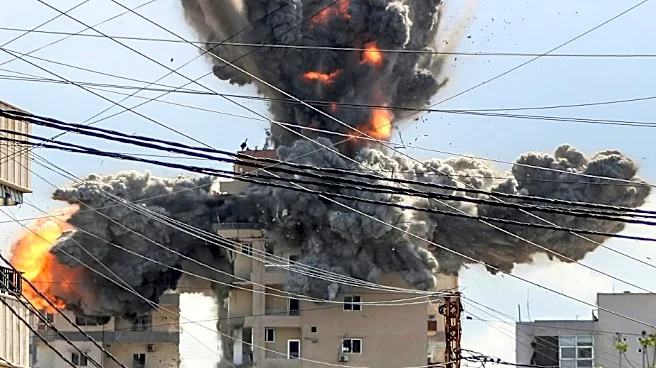
Lebanon is experiencing a food security crisis due to Israel's offensive against Hezbollah, which has disrupted supply chains and increased prices. The United Nations World Food Programme has warned that the situation is rapidly becoming a food security crisis,
with rising prices and demand among displaced families. The Lebanese Ministry of Economy and Trade has stated that national food stocks are sufficient for three to four months, but prices for vegetables and bread have soared. The conflict has led to market collapses in the south, where more than 80% of markets are no longer functioning, while those in Beirut are under increasing strain.
Why It's Important?
The food security crisis in Lebanon highlights the broader humanitarian impact of regional conflicts. The disruption of supply chains and rising prices exacerbate existing vulnerabilities, pushing communities closer to the edge. The situation underscores the challenges of maintaining food security in conflict zones and the need for international aid and support. The crisis also reflects the interconnectedness of regional conflicts, as the focus shifts to the Iran war, impacting Lebanon's stability and food security. The involvement of the United Nations World Food Programme illustrates the importance of international organizations in addressing humanitarian needs.