
What's Happening?
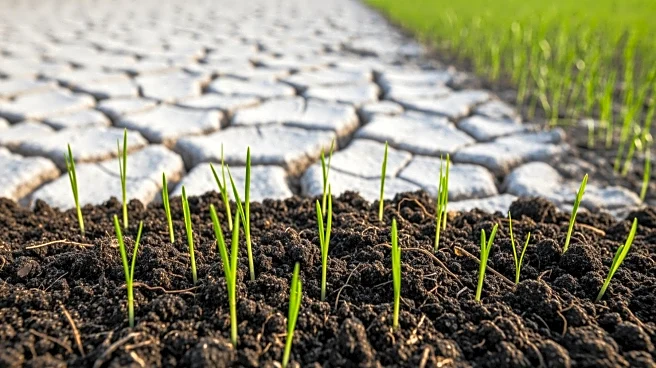
In Shandong province, China, the Agricultural High-tech Industrial Demonstration Area of the Yellow River Delta has successfully increased its cultivated land area for four consecutive years by introducing
new saline-tolerant crops. This transformation of saline-alkali land into fertile soil is a testament to the power of technological innovation in agriculture. The Crop Research Institute at the Shandong Academy of Agricultural Sciences, led by Cao Xinyou, has developed a new wheat species, Jimai 44, which has achieved record yields and is now planted across 42.51 million mu of land. Additionally, Tian Zhixi from the Institute of Genetics and Developmental Biology has developed a saline-tolerant soybean variety, Keduo 35, which has shown promising yields on saline-alkali land. These advancements are part of a broader effort involving 46 innovation teams across China to tackle key agricultural challenges.
Why It's Important?
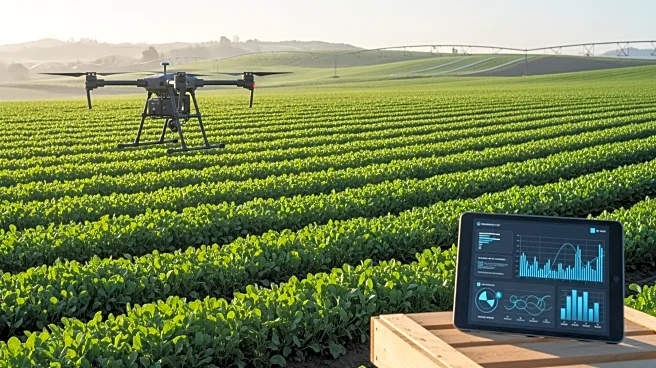
The advancements in Shandong's agriculture highlight the critical role of technology in addressing food security and land use challenges. By transforming previously unusable saline-alkali land into productive farmland, these innovations not only increase agricultural output but also contribute to sustainable farming practices. The success of crops like Jimai 44 and Keduo 35 demonstrates the potential for similar technological applications in other regions facing similar challenges. This could lead to increased food production and economic benefits for farmers, while also reducing the environmental impact of traditional farming methods. The integration of smart technologies, such as IoT and AI, further enhances the efficiency and precision of agricultural practices, setting a precedent for future developments in the sector.
What's Next?
The continued focus on breeding and cultivating saline-tolerant crops is expected to expand, with the potential to cover more saline-alkali land in Shandong and beyond. The success of these initiatives may encourage other regions to adopt similar technologies, potentially leading to a broader transformation of agricultural practices globally. As more innovation teams collaborate on these challenges, further breakthroughs in crop resilience and yield are anticipated. Additionally, the integration of smart agriculture technologies will likely continue to evolve, offering new solutions for precision farming and resource management.
Beyond the Headlines
The transformation of saline-alkali land into fertile soil in Shandong not only addresses immediate agricultural challenges but also raises important questions about the future of land use and food security. The ethical implications of genetic modification and technological intervention in agriculture may become a topic of debate as these practices become more widespread. Furthermore, the success of these initiatives could influence policy decisions regarding land management and agricultural subsidies, potentially reshaping the agricultural landscape in China and other countries facing similar challenges.