








What's Happening?
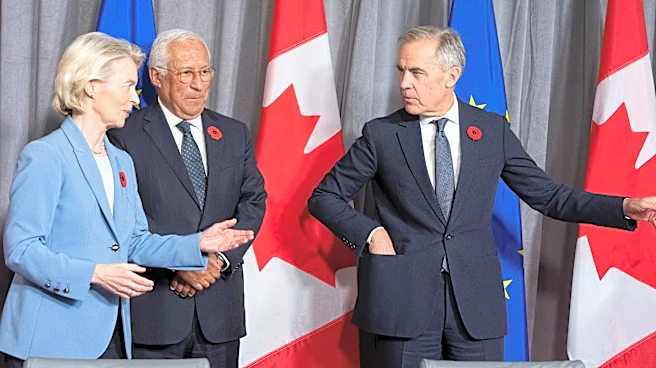
The Canada Border Services Agency (CBSA) and Frontex, the European Border and Coast Guard Agency, have signed a new Working Arrangement on Operational Cooperation. The agreement was formalized in Montreal during the European Union (EU)–Canada summit by
CBSA President Erin O’Gorman and Frontex Executive Director Hans Leijtens. This new arrangement aims to deepen operational cooperation and information exchange between the two agencies, particularly concerning cross-border issues such as criminal threats and migration. It also emphasizes maintaining strong privacy and data protection safeguards. The collaboration is expected to enhance efforts in combating migrant smuggling, human trafficking, and document and identity fraud. Additionally, the arrangement fosters new opportunities for cooperation in research, technology, and innovation, including the exchange of best practices in border management tools and information sharing through EUROSUR, the European Border Surveillance System.
Why It's Important?
This new working arrangement signifies a strengthened international partnership in border security, with potential benefits for both Canada and the EU. For Canada, it provides enhanced access to European intelligence and best practices in managing complex border challenges, including organized crime and irregular migration. For Frontex, it expands its network of international partners, allowing for broader information exchange and coordinated efforts beyond EU borders. The focus on joint training and professional exchanges will enable both agencies to leverage shared expertise, potentially leading to more effective and efficient border management strategies. This collaboration is particularly important in addressing transnational criminal activities that often exploit international borders, impacting the security and integrity of both regions.
Beyond the Headlines
The collaboration between CBSA and Frontex, while focused on operational efficiency and security, also highlights the increasing interconnectedness of global border management challenges. The emphasis on maintaining strong privacy and data protection safeguards within the agreement underscores the delicate balance between security imperatives and individual rights in an era of extensive information sharing. This partnership could serve as a model for other international collaborations, demonstrating how countries can work together to address complex issues like migration and cross-border crime while attempting to uphold ethical standards. The exchange of research, technology, and innovation in border management tools suggests a future where advanced technologies play a more significant role in securing borders, potentially leading to new debates about surveillance capabilities and their societal impact.