

What's Happening?
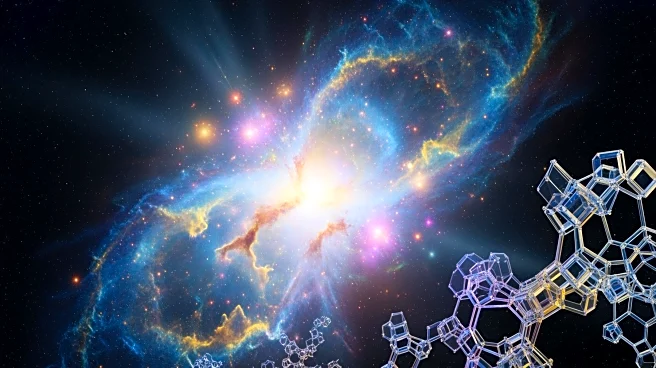
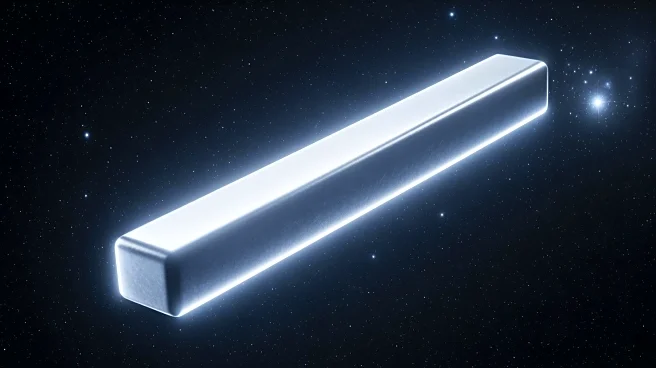
Astronomers from Cardiff University and University College London have discovered a large bar-shaped cloud of iron atoms within the Ring Nebula, a colorful cloud formed by a dying sun-like star. This structure, found 2,283 light-years away, is approximately
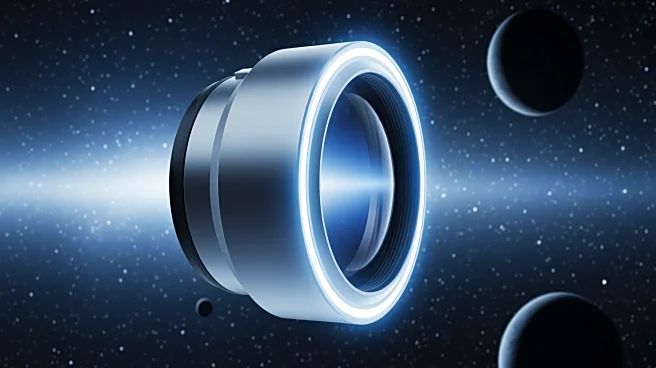
500 times wider than Pluto's orbit. The discovery was made using the WHT Enhanced Area Velocity Explorer (Weave), a new telescope instrument. The origin of the iron bar is unclear, but it may have formed during the nebula's creation or from a rocky planet destroyed as the star expanded. This finding could provide insights into Earth's future as the sun eventually expels its outer layers.
Why It's Important?
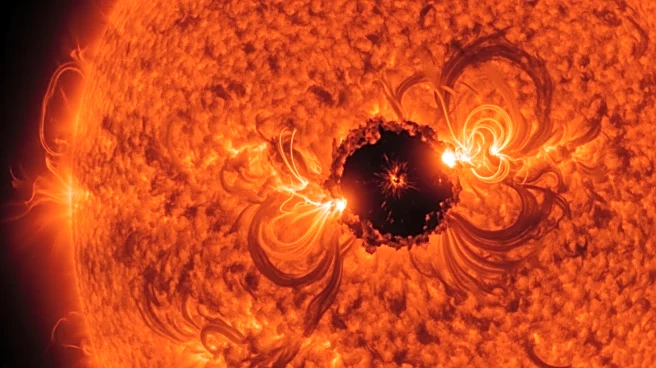
This discovery is significant as it may offer a glimpse into the future of Earth and its solar system. Understanding the formation and composition of such structures can help scientists predict the long-term evolution of our own sun and the potential fate of Earth. The research highlights the importance of advanced astronomical instruments in uncovering new cosmic phenomena. The findings could also contribute to broader astrophysical theories about the life cycles of stars and the formation of planetary systems.
What's Next?
Further observations are planned to determine the precise nature and origin of the iron bar. Researchers aim to explore whether other chemical elements coexist with the iron, which could provide additional clues about the structure's formation. These studies will enhance our understanding of stellar evolution and the potential implications for Earth. The ongoing research will likely involve collaboration with other astronomical institutions and the use of additional advanced telescopes.