




What's Happening?
The Wyoming Game and Fish Department (WGFD) has implemented new permit fees and regulations for commercial fishing guides, marking the first statewide oversight of the industry since 1989. Concurrently, the Bridger-Teton National Forest (BTNF) continues
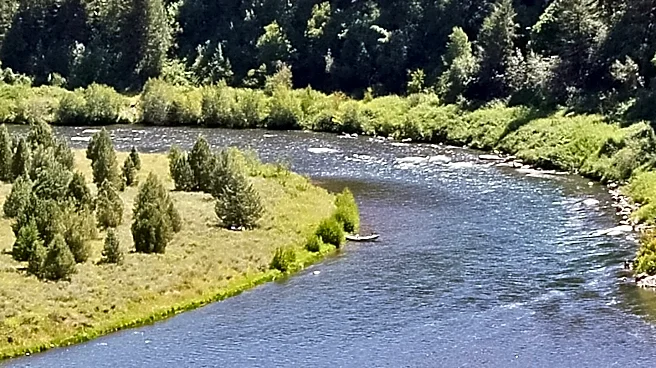
its second year of a recreation fee program for the Snake River Canyon. As of September 24, WGFD collected $200,525 from registration stickers, with over 500 individuals purchasing 617 guided fishing boat stickers. Commercial guides pay $325 annually and submit bi-annual trip reports. The BTNF collected $61,315 from private river users between May and August, with fees funding enhancement projects at boating sites. These initiatives aim to manage increasing river use and ensure resource sustainability.
Why It's Important?
These new fees and regulations are crucial for managing the growing recreational use of the Snake River, a vital natural resource in Wyoming. The WGFD's program provides much-needed data and oversight for the commercial fishing industry, which previously lacked state-level regulation, ensuring better management of fish populations and guide practices. The BTNF fees contribute directly to maintaining and improving public access points and facilities, which are under increasing strain from higher visitor numbers. This dual approach helps balance economic activity from tourism with environmental conservation, impacting local businesses, recreational users, and the long-term health of the river ecosystem. It also highlights a shift towards user-pays models for public land and resource management.
What's Next?
The future of the WGFD's program is under legislative review, with recommendations for establishing a standalone fishing outfitters and guides board to ensure professional standards and resource sustainability. The BTNF plans to use the collected fees for specific enhancement projects at boating sites, though definite start dates are pending. Stakeholders, including guides and private users, will continue to adapt to these new requirements. Ongoing data collection from both agencies will inform future policy adjustments, potentially leading to further refinements in fee structures or regulatory measures to address evolving usage patterns and environmental concerns on the Snake River. Discussions will likely continue regarding the optimal balance between access and preservation.
Beyond the Headlines
The implementation of these fees and regulations on the Snake River reflects a broader national trend of managing increasingly popular natural resources through user fees and stricter oversight. This development raises questions about equitable access to public lands, the financial burden on recreational users and small businesses, and the effectiveness of such programs in achieving conservation goals. It also underscores the tension between promoting tourism for economic benefit and protecting fragile ecosystems from overuse. The long-term success of these initiatives will depend on transparent allocation of funds, continuous monitoring of environmental impacts, and ongoing engagement with all stakeholders to ensure that the Snake River remains a valuable resource for both recreation and ecological health.