





What's Happening?
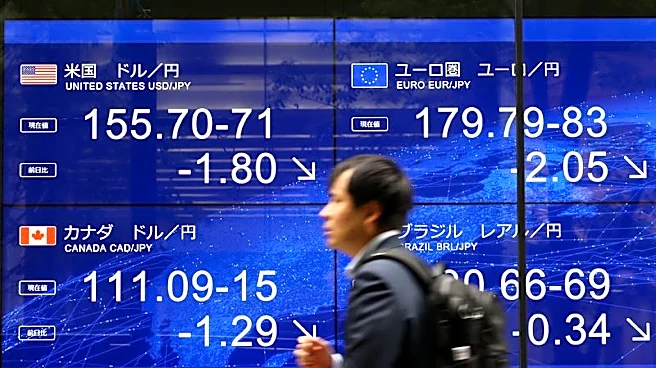
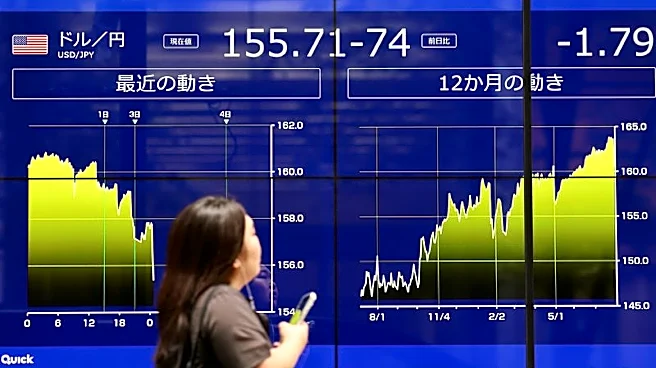
Japan and the United States have conducted a rare joint intervention to stabilize the yen, which has reached a 40-year low. The intervention involved purchasing yen to counteract its depreciation, with Japan reportedly spending $52.8 billion. The U.S.
contribution remains unspecified, though Treasury Secretary Scott Bessent's notes suggest a $5-10 billion range. The intervention used euros instead of dollars, a decision that has raised concerns among economists about its effectiveness. Experts argue that without addressing Japan's underlying economic issues, such as its accommodative monetary policy and fiscal challenges, the intervention may not yield long-term results.
Why It's Important?
The decision to use euros instead of dollars in the intervention is significant as it deviates from traditional currency stabilization methods. This move could impact market confidence and the perceived effectiveness of the intervention. The yen's stability is crucial for Japan's economy, affecting its export competitiveness and inflation rates. For the U.S., supporting the yen aligns with broader economic and geopolitical objectives, potentially influencing global financial markets. The intervention also reflects a shift in U.S. foreign currency policy, indicating a more active role in global economic stabilization efforts.
What's Next?
The intervention's success will depend on Japan's ability to address its economic fundamentals, such as interest rate differentials and fiscal policies. The U.S. and Japan may continue coordinated interventions if the yen remains volatile. Market reactions and the yen's performance will be closely monitored, as will any policy adjustments by the Bank of Japan. The intervention could set a precedent for future U.S. involvement in foreign currency markets, potentially influencing global economic strategies.