



What's Happening?
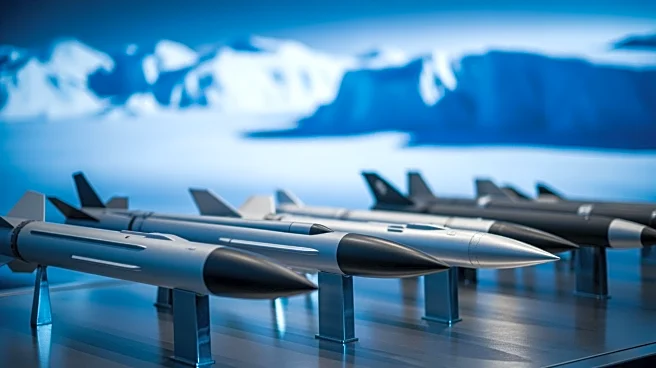
In January 2026, Denmark secured approval from the U.S. government to purchase American-made missiles to bolster its defense capabilities around Greenland. This transaction, part of the Foreign Military Sales program, involves up to 100 AGM-114R Hellfire
missiles, launch equipment, training, and logistical support, valued at approximately $45 million. The sale aims to enhance Denmark's national and NATO defense requirements and improve interoperability with U.S. forces. The deal comes amid President Trump's public interest in acquiring Greenland, creating an ironic situation where Denmark is buying missiles to defend a territory that the U.S. administration has expressed interest in owning.
Why It's Important?
Greenland's strategic significance is underscored by its location along key Arctic air and sea routes, making it vital for missile warning, space surveillance, and North Atlantic defense. The U.S. has maintained military facilities there since World War II, including the Pituffik Space Base, a critical component of Arctic defense architecture. President Trump's rhetoric about acquiring Greenland has raised concerns for Denmark, which is responsible for Greenland's defense. The missile purchase reflects Denmark's commitment to reinforcing deterrence and meeting alliance commitments without escalating tensions. This situation highlights the complexities of alliance management and the impact of political messaging on international relations.
What's Next?
Denmark is likely to continue investing in defense capabilities and cooperation with the U.S. while maintaining its stance that Greenland is not for sale. The missile purchase aligns with Denmark's strategy to reinforce deterrence and fulfill NATO commitments. The U.S. may continue to pursue defense initiatives in the Arctic without requiring sovereignty over Greenland, relying on existing agreements for radar upgrades and missile defense cooperation. The situation underscores the importance of balancing strategic objectives with diplomatic relations within alliances.
Beyond the Headlines
The irony of Denmark buying U.S. missiles to defend Greenland while the U.S. president questions its sovereignty highlights the tension between alliance governance and political rhetoric. Foreign Military Sales are meant to reinforce trust and partnership, but political statements undermining an ally's sovereignty can have the opposite effect. Greenland's strategic importance will persist, and cooperation will remain crucial for effective defense. Denmark's approach to the missile purchase reflects a commitment to shared responsibility rather than territorial disputes, emphasizing the importance of maintaining alliance integrity.