





What's Happening?
NASA's Artemis II crew, consisting of astronauts Reid Wiseman, Victor Glover, Christina Koch, and Canadian astronaut Jeremy Hansen, successfully returned to Earth on April 10, 2026. The crew completed a historic 10-day mission that took them farther into
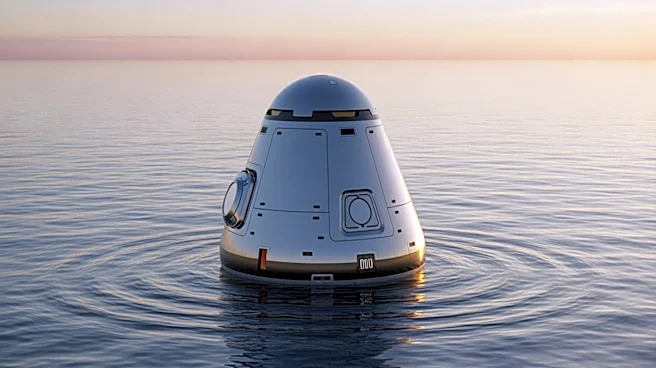
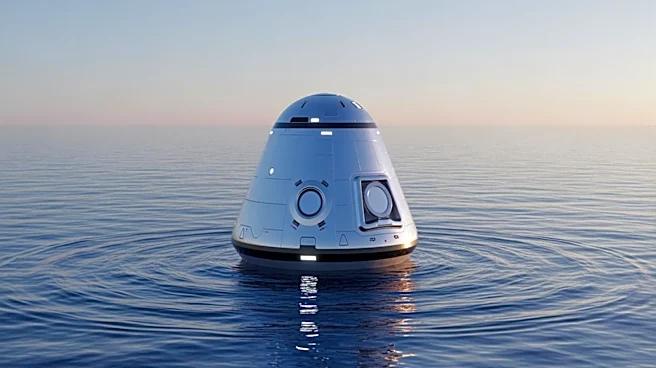
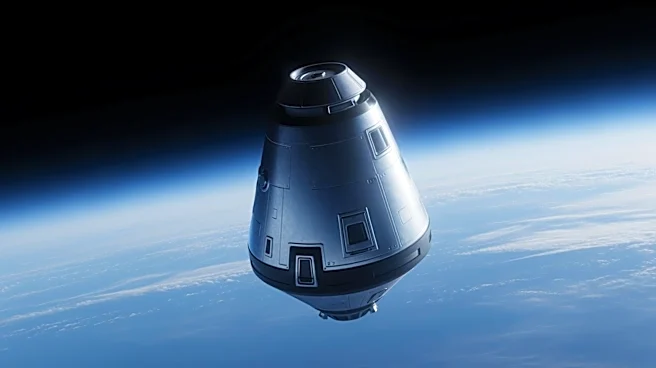
space than any humans have ever gone before. The mission included a flyby of the Moon's far side, setting a record for the farthest crewed spaceflight. The Artemis II mission launched from Kennedy Space Center using NASA's Space Launch System rocket and the Orion spacecraft, powered by ESA's European Service Module. The crew orbited Earth several times before embarking on a four-day journey to the Moon, reaching a closest approach of approximately 4,670 statute miles above the lunar surface. They captured unprecedented images of the Moon's far side and conducted scientific investigations. The mission concluded with a precise splashdown in the Pacific Ocean off San Diego.
Why It's Important?
The successful completion of the Artemis II mission marks a significant milestone in NASA's lunar exploration program. It demonstrates the capabilities of the Orion spacecraft and the European Service Module in supporting human spaceflight beyond low Earth orbit. This mission validates the systems necessary for sustained lunar presence and sets the stage for future Artemis missions, which aim to establish a long-term human presence on the Moon. The international collaboration, particularly with the European Space Agency, highlights the importance of global partnerships in advancing space exploration. The mission's achievements, including the record-setting distance and lunar imagery, provide valuable data for future missions and reduce risks associated with deep-space operations.
What's Next?
Following the success of Artemis II, NASA is expected to continue preparations for subsequent Artemis missions, which will involve more complex maneuvers and potentially longer durations in space. These missions aim to establish a sustainable human presence on the Moon and pave the way for future exploration of Mars. The validation of the Orion spacecraft's systems during Artemis II reduces risks for these future missions, ensuring safer and more reliable human spaceflight. International partnerships will continue to play a crucial role in these endeavors, with contributions from agencies like ESA being integral to mission success.
Beyond the Headlines
The Artemis II mission not only advances technological capabilities but also inspires a new generation of scientists and engineers. The mission's success underscores the importance of international collaboration in space exploration, fostering a sense of unity and shared goals among participating countries. The images captured during the mission provide a unique perspective on the Moon, contributing to scientific understanding and public interest in lunar exploration. As NASA progresses with its Artemis program, ethical considerations regarding space exploration and resource utilization on the Moon may become increasingly relevant.