



What's Happening?
The Southern Transitional Council (STC), a prominent separatist group in southern Yemen, has reported losing contact with its delegation that traveled to Riyadh for discussions aimed at reducing tensions among rival factions. The delegation, consisting
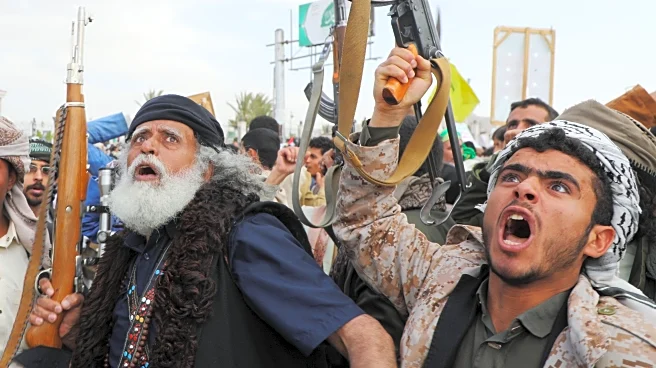
of 50 members, arrived in the Saudi capital but subsequently went silent, with their phones turned off and their whereabouts unknown. This development follows the expulsion of the STC leader by Yemen's internationally recognized government, which accused him of treason for refusing to attend the talks in Saudi Arabia. The STC, supported by the United Arab Emirates, seeks an independent southern Yemen, a move opposed by Saudi Arabia. Recent tensions have escalated, with Saudi Arabia launching airstrikes against the separatists, further complicating the coalition's efforts to combat the Iranian-backed Houthi rebels.
Why It's Important?
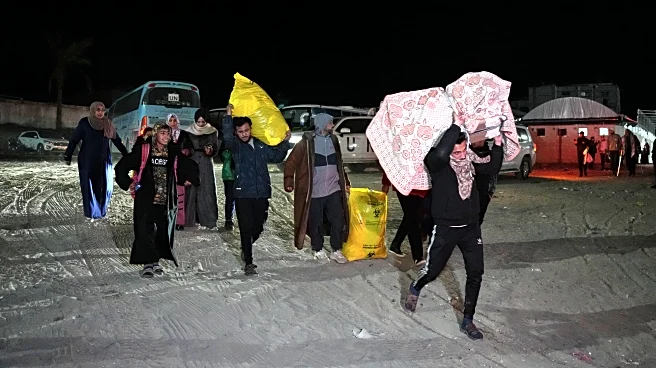
The situation underscores the fragile alliances within the coalition fighting the Houthi rebels in Yemen's protracted civil war. The STC's push for independence threatens to fracture the coalition, potentially leading to further conflict in the region. Saudi Arabia's airstrikes against the STC highlight the deepening rift between coalition members, particularly between Saudi Arabia and the UAE. This internal discord could undermine efforts to restore Yemen's internationally recognized government and exacerbate the humanitarian crisis in the country. The conflict has already resulted in over 150,000 deaths and one of the world's worst humanitarian disasters, with millions facing food insecurity and displacement.
What's Next?
The immediate future may see increased military actions as Saudi Arabia continues its airstrikes against STC positions. The STC's refusal to engage in talks under current conditions suggests a prolonged standoff, potentially leading to more violence. The international community, including the United Nations, may need to intervene to mediate and prevent further escalation. The UAE's role and its support for the STC could also come under scrutiny, potentially affecting its relations with Saudi Arabia. The outcome of these tensions will significantly impact the broader geopolitical dynamics in the Arabian Peninsula.
Beyond the Headlines
The conflict in Yemen highlights the complex interplay of regional politics, with external powers like Saudi Arabia and the UAE influencing internal dynamics. The STC's quest for independence raises questions about the future political landscape of Yemen and the viability of a unified state. The humanitarian implications are profound, with ongoing violence likely to worsen the already dire conditions for civilians. The situation also reflects broader regional power struggles, with Iran's support for the Houthis adding another layer of complexity to the conflict.