







What's Happening?
Marcin Jakubowski, originally from Communist Poland, has embarked on an innovative project to promote self-sufficiency through open-source design. After moving to the United States, Jakubowski experienced the stark contrast between scarcity in Poland and abundance
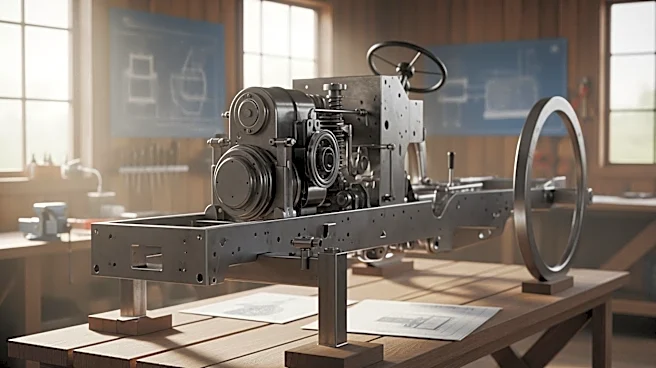
in America. However, he also noticed that financial constraints still limited access to essential goods for many. This realization led him to purchase a soybean farm in Missouri, where he began a 'civilization start-up' experiment. When faced with a costly tractor repair, Jakubowski decided to build his own tractor and share the design online for free. This initiative evolved into the Global Village Construction Set, a collaborative project aimed at creating open-source designs for 50 essential machines. The project has gained international attention, attracting volunteers and leading to a TED talk.
Why It's Important?
Jakubowski's initiative is significant as it challenges traditional economic models by promoting open-source collaboration and self-reliance. By providing free access to designs for essential machinery, the project empowers individuals and communities to become more self-sufficient, potentially reducing dependency on commercial manufacturers. This approach could lead to a shift in how goods are produced and distributed, fostering a more equitable economic landscape. The project also highlights the potential of open-source design to address issues of scarcity and access, particularly in underserved communities. If successful, it could inspire similar initiatives across various sectors, promoting innovation and sustainability.
What's Next?
The future of Jakubowski's project involves expanding the Global Village Construction Set and increasing collaboration among participants. Efforts will focus on refining designs, enhancing accessibility, and encouraging more people to contribute to the open-source platform. The project's success depends on its ability to mainstream open-source design and demonstrate its viability as an alternative to traditional manufacturing. Potential challenges include ensuring quality control, maintaining engagement from volunteers, and overcoming resistance from established industries. As the project progresses, it may influence policy discussions on intellectual property and innovation, potentially leading to broader acceptance of open-source principles.
Beyond the Headlines
Beyond its immediate goals, Jakubowski's project raises important questions about the future of manufacturing and economic equity. By democratizing access to essential tools, the initiative challenges the notion that technological advancement must be proprietary and profit-driven. It also underscores the potential for grassroots innovation to address global challenges, such as resource scarcity and economic inequality. The project's emphasis on collaboration and shared knowledge could foster a cultural shift towards more cooperative and sustainable practices. As more people engage with open-source design, it may lead to a reevaluation of how society values and rewards innovation.