








What's Happening?
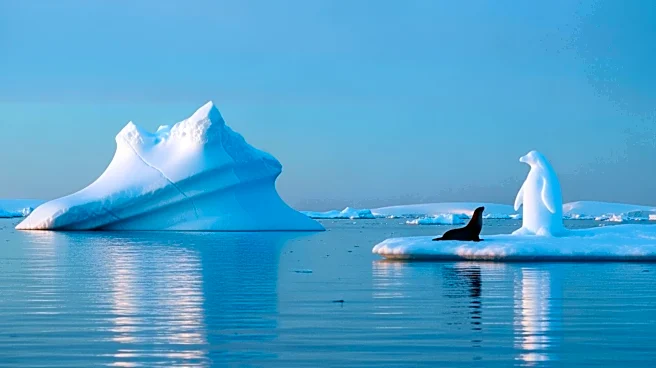
The International Union for Conservation of Nature (IUCN) has updated its Red List to classify the emperor penguin and the Antarctic fur seal as endangered species. This decision follows a significant decline in their populations, attributed primarily
to the impacts of climate change. The emperor penguin population has decreased by approximately 10% between 2009 and 2018, with projections indicating a potential halving by the 2080s. The Antarctic fur seal population has also seen a dramatic reduction, dropping by more than 50% from over 2 million mature seals in 1999 to 944,000 in 2025. Additionally, the southern elephant seal has been reclassified from 'least concern' to 'vulnerable' due to the devastating effects of avian flu, which has killed over 90% of newborn pups in some colonies.
Why It's Important?
The reclassification of these species highlights the severe impact of climate change on Antarctic wildlife. The loss of sea ice, crucial for breeding and feeding, poses a significant threat to the survival of emperor penguins. The decline of these species serves as a stark indicator of the broader environmental challenges posed by global warming. The situation underscores the urgent need for effective climate change policies to mitigate further damage. The World Wide Fund for Nature emphasizes that the fate of these species is closely tied to global climate policy, advocating for a transition away from fossil fuels and efforts to limit global temperature increases.
What's Next?
The future of these species depends heavily on international climate action. Conservationists and environmental organizations are likely to increase pressure on governments to implement policies that address climate change. This may include advocating for stricter emissions regulations and promoting renewable energy sources. The IUCN and other environmental bodies will continue to monitor these species, providing data to inform policy decisions. The situation also calls for increased research into adaptive strategies that could help these species survive in changing environments.
Beyond the Headlines
The plight of the emperor penguin and other Antarctic species raises ethical questions about humanity's responsibility to protect vulnerable ecosystems. The rapid changes in the Antarctic environment could have cascading effects on global biodiversity and ecological balance. This situation also highlights the interconnectedness of global ecosystems, where changes in one region can have far-reaching impacts. The ongoing decline of these species may prompt a reevaluation of conservation priorities and strategies, emphasizing the need for a holistic approach to environmental protection.