






What's Happening?
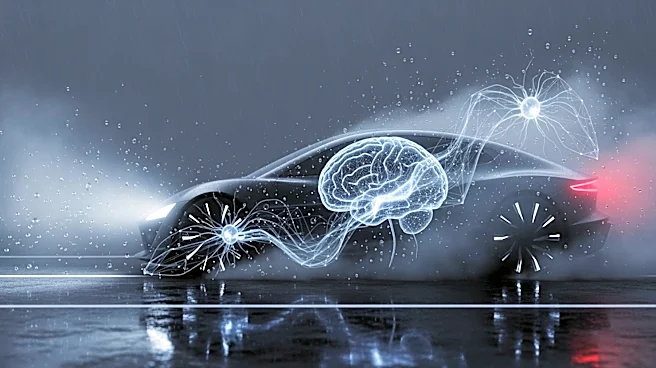
Research from the University of Valencia suggests that self-driving cars can be made safer by imitating the human brain's ability to adapt to changing conditions. Current AI systems in self-driving cars perform well in clear conditions but struggle in fog,
rain, or darkness. The study proposes using a brain-inspired mechanism called divisive normalization, which allows neurons to work together to enhance visibility in varying conditions. By integrating this mechanism into AI models, researchers found that self-driving cars could maintain performance even in adverse weather, improving safety by more than 20% compared to standard AI systems.
Why It's Important?
The findings highlight a critical challenge in the development of self-driving technology: ensuring safety in all weather conditions. As self-driving cars become more prevalent, their ability to operate safely in fog, rain, or darkness is essential for public trust and widespread adoption. The research suggests that incorporating biological principles into AI systems could enhance their robustness and adaptability, potentially leading to safer autonomous vehicles. This development is significant for the U.S. automotive industry, which is heavily invested in advancing self-driving technology and addressing safety concerns.
Beyond the Headlines
The study underscores the importance of learning from nature to solve complex technological challenges. By mimicking the brain's adaptation mechanisms, AI systems can become more resilient and reliable. This approach not only improves the safety of self-driving cars but also opens new avenues for AI research, emphasizing the value of interdisciplinary collaboration between neuroscience and technology. As AI continues to evolve, integrating biological insights could lead to more innovative and effective solutions across various applications.