






What's Happening?
The U.S. Army has clarified that its stockpile of Lockheed Martin Precision Strike Missiles (PRSMs) remains intact despite earlier reports suggesting depletion during the conflict with Iran. This statement comes after a senior official at the Fires Symposium
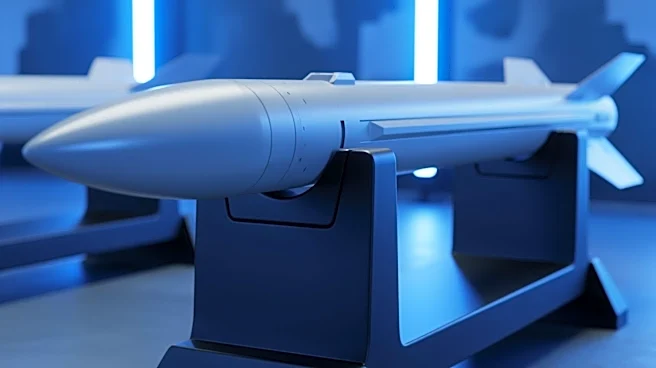
in Lawton, Oklahoma, indicated that the entire inventory of PRSMs had been used at the onset of the Iran war. The Fires Center of Excellence, responsible for developing artillery and air defense requirements, corrected this claim, confirming that a number of these missiles are still available. The PRSM, a developmental ballistic missile with a range exceeding 400 kilometers, is designed to augment and eventually replace the Army Tactical Missile System (ATACMS). The Army had ordered 130 PRSMs before fiscal 2024, though the exact number delivered remains unspecified. Some missiles have been utilized in development and operational tests.
Why It's Important?
The clarification regarding the PRSM stockpile is significant for U.S. military readiness and strategic capabilities. The PRSM's extended range offers a tactical advantage over the existing ATACMS, enhancing the U.S. Army's ability to engage targets at greater distances. Maintaining an adequate stockpile ensures that the U.S. can sustain its military operations without interruption. This development also underscores the importance of accurate communication within military ranks and to the public, as misinformation can lead to unnecessary concerns about national security. The ongoing development and deployment of the PRSM reflect the U.S. military's commitment to modernizing its arsenal to address evolving threats.
What's Next?
The U.S. Army is likely to continue its efforts to replenish and expand its PRSM stockpile to ensure readiness for future conflicts. Lockheed Martin's ongoing development of the PRSM will be crucial in meeting the Army's requirements for a more capable and longer-range missile system. Additionally, the Army may review its communication protocols to prevent similar miscommunications in the future. As the PRSM program progresses, further testing and evaluation will be necessary to fully integrate the missile into the Army's operational framework.