






What's Happening?
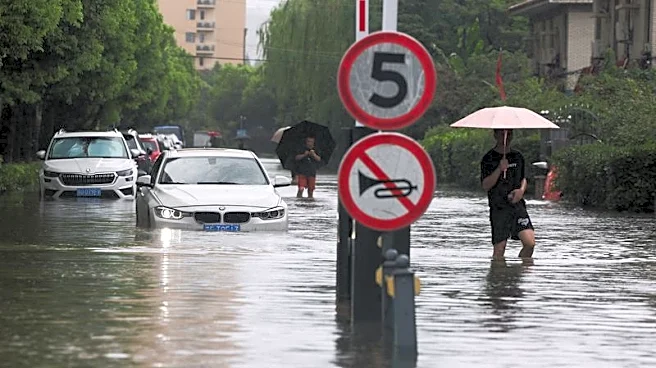
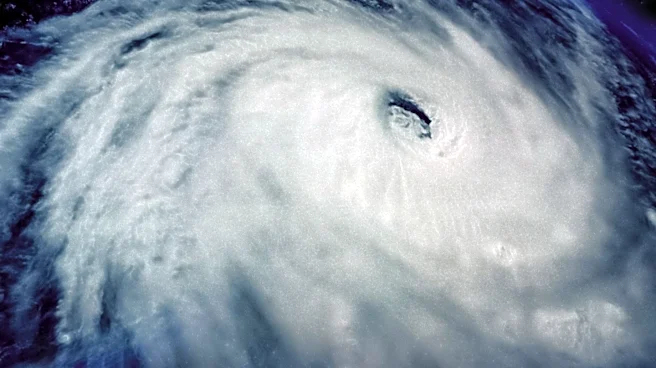
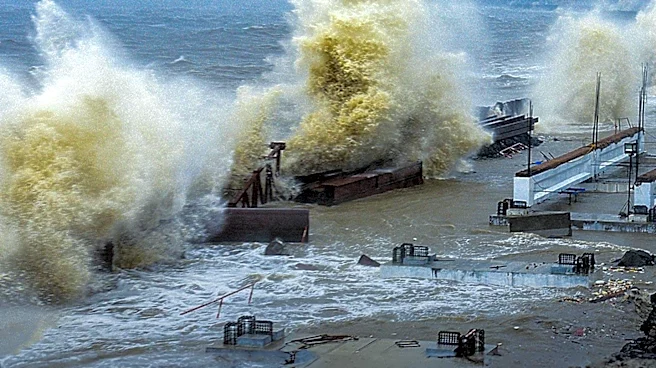
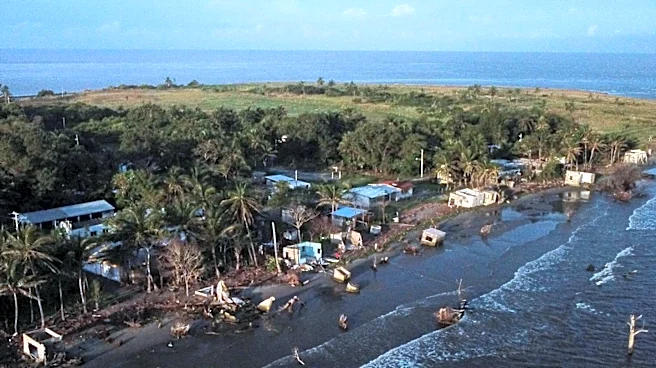
Typhoon Dolphin has struck eastern China, leading to the evacuation of over one million residents, particularly in the Zhejiang province. The storm, which made landfall with winds reaching up to 150 kilometers per hour, has caused significant disruptions,
including the grounding of flights and the closure of transportation services. The typhoon has brought heavy rainfall, flooding, and the risk of landslides to the region. In Shanghai, approximately 40% of flights were canceled due to adverse weather conditions. The storm is expected to weaken as it moves inland, but authorities remain vigilant, warning of potential severe flooding and landslides.
Why It's Important?
The impact of Typhoon Dolphin highlights the vulnerability of densely populated regions to severe weather events. The evacuation of over a million people underscores the scale of the threat posed by such natural disasters. The disruption to transportation and the potential for significant economic losses in affected areas, including major cities like Shanghai, could have broader implications for regional stability and economic activity. The response by Chinese authorities, including mass evacuations and the establishment of emergency shelters, reflects the critical need for preparedness in the face of increasingly frequent and intense weather events.
What's Next?
As Typhoon Dolphin continues to move inland, it is expected to weaken, but the risk of prolonged heavy rainfall remains. Authorities are likely to maintain high alert levels, particularly in areas prone to flooding and landslides. The focus will be on ensuring the safety of evacuated residents and minimizing damage to infrastructure. The situation will require ongoing monitoring and potential further evacuations if conditions worsen. The response to this typhoon may also prompt discussions on improving infrastructure resilience and emergency response strategies in the face of future storms.