



What's Happening?
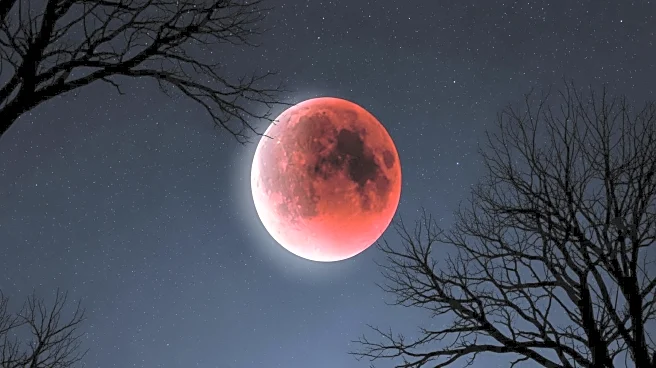
The lunar eclipse on March 3, 2026, presented a unique spectacle as the moon turned a copper-red hue during the early morning hours. This total lunar eclipse, occurring during the full 'Worm Moon,' was visible across the Americas, the Pacific, and parts
of Asia. In Florida, the eclipse began at 3:44 a.m. ET, with totality peaking at 6:33 a.m. ET, just before sunrise. The event was visible to an estimated three billion people worldwide, with no special viewing equipment required. The eclipse's timing and visibility varied slightly by location, adding a layer of regional uniqueness to the experience.
Why It's Important?
This lunar eclipse is important as it highlights the intersection of natural phenomena and human curiosity. The event draws attention to the beauty and predictability of celestial mechanics, encouraging public interest in astronomy and science. The widespread visibility of the eclipse fosters a sense of global connection, as people across different regions share in the experience. Additionally, the event serves as a reminder of the cultural and historical significance of lunar eclipses, often associated with folklore and prophecy, which continue to captivate the human imagination.
What's Next?
Future lunar eclipses will continue to offer opportunities for public engagement and education in astronomy. As interest in such events grows, there may be increased investment in astronomical research and technology, as well as educational programs aimed at fostering a deeper understanding of celestial phenomena. The next total lunar eclipse is not expected until New Year's Eve 2028-2029, providing ample time for preparation and anticipation among skywatchers and scientists alike.