



What's Happening?
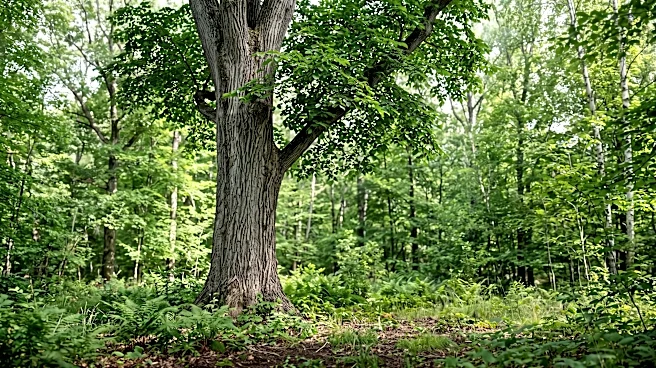
Scientists with the U.S. Forest Service and The Nature Conservancy Vermont are actively working to revive American elm trees, which have been severely impacted by Dutch elm disease for nearly a century. This summer, researchers injected 6,000 young elm trees with Dutch elm disease spores
to identify and select those with natural resistance. The surviving trees will be integrated into a breeding program designed to enhance the genetic diversity of disease-tolerant elms. The ultimate goal is to cultivate a new generation of resistant trees for restoration efforts in forests, along riverbanks, and in urban and suburban areas. This initiative is a direct response to the widespread devastation caused by the fungus, which is spread by bark beetles and prevents trees from absorbing water, leading to their demise. The project builds upon a small group of naturally resistant elm trees found in the Northeast.
Why It's Important?
The effort to restore American elm trees is crucial for several reasons, particularly in the context of climate change. American elms play a significant role in the hydrology of their ecosystems, acting as natural sponges that absorb rainfall and help prevent catastrophic flooding in river systems. Their ability to tolerate flooding and cold winters makes them especially vital in wet forest areas and the northern U.S. The loss of these trees has had a profound ecological impact, threatening biodiversity and the stability of fragile ecosystems. Beyond their ecological importance, American elms hold significant cultural value, especially in New England towns where they were once a ubiquitous part of the landscape. Their decline has left a void in these communities, and the prospect of their return offers a sense of hope and restoration. This breeding program represents a proactive approach to combating forest diseases, which pose a continuous threat to the nation's forests and the industries that rely on them.
What's Next?
The immediate next step for the surviving elm trees is their integration into a seed orchard. These trees will be nurtured for approximately 15 years until they are mature enough to produce seeds. These seeds will then be utilized for widespread restoration projects, aiming to reintroduce disease-resistant American elms into various landscapes. The success of this breeding program could lead to a significant increase in the genetic resistance of elms across the region. This initiative is part of a broader national effort to combat forest pests and diseases, suggesting that similar breeding programs or other innovative solutions may be explored for other threatened tree species. The long-term vision is to see these resistant elms not only in urban plantings but also along riverbanks, bolstering regional ecological resilience and mitigating the impacts of climate change.
Beyond the Headlines
This initiative highlights a deeper shift in conservation strategies, moving beyond reactive measures to proactive, science-driven interventions. The use of the disease itself to identify resistant individuals for breeding is a testament to adaptive scientific approaches in ecological restoration. It underscores the understanding that in the face of persistent environmental threats like invasive species and climate change, fostering natural resilience through genetic diversity is paramount. The cultural significance of the American elm, deeply embedded in the collective memory of many communities, adds an emotional layer to this scientific endeavor. The project implicitly acknowledges the long-term commitment required for ecological recovery, with a 15-year timeline for seed production. This long-term perspective is essential for addressing complex environmental challenges and fostering a more sustainable relationship with natural ecosystems. The contrast with the ash tree inoculation effort, which is an ongoing treatment, further emphasizes the strategic difference between breeding for inherent resistance and managing existing infestations.