

What's Happening?
The Iowa State Fair has once again emerged as a central stage for political candidates to directly engage with voters, serving as an 11-day event for campaigning and public outreach. This year, numerous political figures have utilized the fair to connect
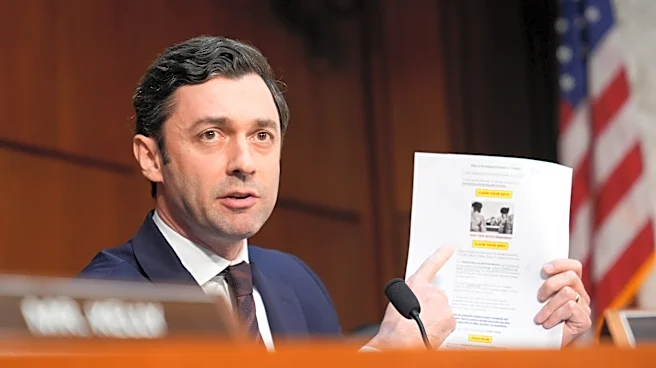
with constituents and articulate their platforms. U.S. Representatives Zach Nunn and Ashley Hinson, alongside Senator Chuck Grassley, participated in discussions focusing on Iowa businesses, manufacturing, and trade, highlighting issues pertinent to the state's economic landscape. Gubernatorial candidates Rob Sand and Zach Lahn were also present, interacting with fairgoers, serving food, and outlining their priorities from the Des Moines Register Political Soapbox, a traditional venue for candidates to address the public. Other candidates, including U.S. Senate candidate Josh Turek and 3rd Congressional District candidate Sarah Trone Garriott, focused on critical issues such as healthcare, housing, cost of living, and government reform, aiming to resonate with the concerns of everyday Iowans. Even out-of-state figures like Arizona Senator Mark Kelly visited the fair, underscoring its national significance as a political touchstone. The fair also saw a notable development in a State Senate race, with Republican State Senator Mike Bousselot announcing his withdrawal from his re-election campaign to pursue a private-sector opportunity, prompting the Republican party to seek a replacement candidate.
Why It's Important?
The Iowa State Fair's role as a crucial political platform is significant for several reasons, particularly in the context of U.S. politics. As an early-voting state and a bellwether for national elections, Iowa provides a unique opportunity for candidates to test their messages and gauge public sentiment directly. The fair allows for informal, face-to-face interactions that can be more impactful than traditional campaign rallies or media appearances, fostering a sense of accessibility and authenticity between politicians and voters. For candidates, it's a chance to build grassroots support, refine their policy positions based on direct feedback, and generate media attention. For voters, it offers an unparalleled opportunity to meet a wide array of candidates, hear their views firsthand, and ask questions in a less formal setting. The discussions on Iowa businesses, manufacturing, and trade, as highlighted by Senator Grassley and Representatives Nunn and Hinson, directly address economic concerns that resonate with the state's agricultural and industrial base. Similarly, the focus on healthcare, housing, and government reform by other candidates reflects pressing societal issues. The fair's political soapbox tradition further democratizes the campaign process, ensuring that candidates from various levels of government and political leanings have a public forum.
What's Next?
As the Iowa State Fair concludes its 11-day run, the candidates who participated will likely transition their campaign efforts to other forms of outreach, leveraging the momentum and connections made at the fair. The direct engagement with voters will inform their strategies, potentially leading to adjustments in messaging or policy emphasis based on the feedback received. For the Republican party in Iowa, the immediate next step will be to identify and select a replacement candidate for State Senator Mike Bousselot's vacated seat, which could trigger a new dynamic in that particular State Senate race. The issues discussed at the fair, such as healthcare, housing, and economic concerns, are expected to remain central themes in the upcoming election cycles, influencing debates and policy proposals. Candidates will continue to campaign across Iowa, participating in town halls, debates, and local events to further solidify their support bases. The insights gained from the fair's unique political environment will be crucial for candidates as they move towards the primary and general elections, shaping their efforts to persuade and mobilize voters across the state.
Beyond the Headlines
The enduring tradition of the Iowa State Fair as a political proving ground reflects deeper aspects of American political culture and the electoral process. It underscores the value placed on direct voter engagement and the retail politics approach, particularly in states like Iowa that play an outsized role in presidential primaries. This tradition suggests that despite the rise of digital campaigning and national media, personal connections and the ability to interact with constituents on a human level remain vital for political success. The fair acts as a microcosm of the broader political landscape, where candidates must navigate diverse opinions, address local concerns, and project an image of relatability. The presence of national figures like Arizona Senator Mark Kelly also highlights the interconnectedness of state and national politics, demonstrating how local events can serve as platforms for broader political narratives. The fair's ability to draw candidates from various levels of government, from local to federal, illustrates its comprehensive role in the democratic process, offering a unique blend of entertainment, community gathering, and serious political discourse that is increasingly rare in modern campaigning.