
What's Happening?
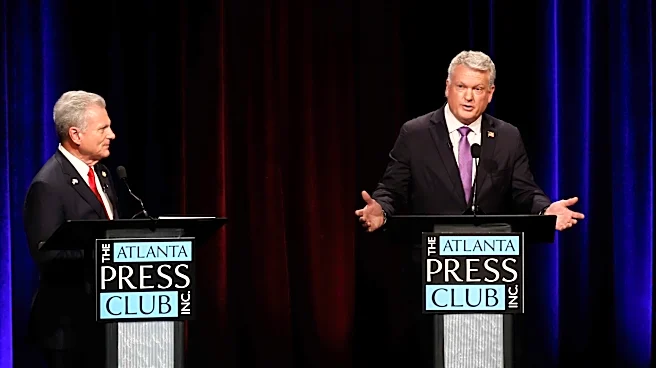
A political action committee (PAC) in Oklahoma has come under scrutiny for running an AI-generated attack ad against Republican gubernatorial candidate Mike Mazzei. The ad, which falsely depicts Mazzei with
Hillary Clinton, accuses him of undermining President Trump's MAGA movement. The PAC, named 'Make Oklahoma Great Again,' is linked to Gentner Drummond's campaign, Mazzei's opponent. The ad has raised questions about potential illegal coordination between the PAC and Drummond's campaign, which both parties deny. The controversy highlights the use of AI in political advertising, with concerns about the authenticity of the content and the ethical implications of such tactics.
Why It's Important?
The use of AI-generated content in political campaigns represents a significant shift in how political messages are crafted and disseminated. This development raises ethical and legal questions about the authenticity of political advertising and the potential for misleading voters. The allegations of illegal coordination between the PAC and Drummond's campaign could have legal ramifications if proven true, potentially affecting campaign finance regulations and enforcement. The situation underscores the need for clear guidelines and oversight in the use of AI in political contexts to ensure transparency and fairness in elections.
What's Next?
As the controversy unfolds, there may be increased scrutiny from regulatory bodies such as the Federal Election Commission regarding the use of AI in political ads. Both Mazzei's and Drummond's campaigns are likely to continue addressing the allegations, with potential legal challenges if evidence of coordination is found. The incident may prompt lawmakers to consider new regulations or updates to existing laws to address the challenges posed by AI in political advertising. Stakeholders, including political consultants and advocacy groups, will be closely monitoring the situation for its implications on future campaign strategies.
Beyond the Headlines
The incident highlights broader concerns about the role of technology in shaping public perception and the potential for AI to be used in manipulative ways. It raises questions about the ethical responsibilities of political consultants and the need for voters to critically evaluate the information presented to them. The use of AI-generated content could lead to a reevaluation of what constitutes 'truth' in political discourse, prompting discussions about media literacy and the importance of verifying information in the digital age.