





What's Happening?
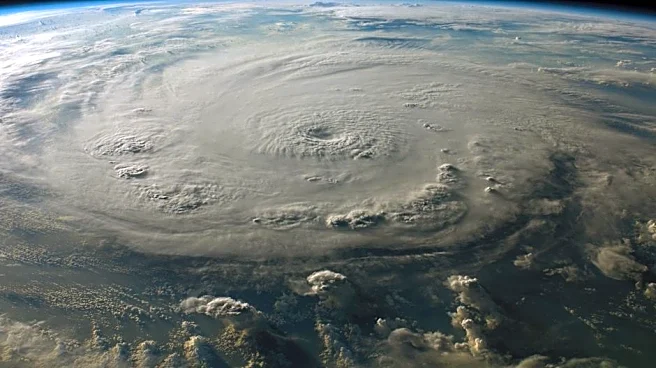
Researchers at Colorado State University (CSU) have updated their forecast for the 2026 Atlantic hurricane season, predicting a well below-normal activity level. The revised forecast anticipates nine named storms, four hurricanes, and one major hurricane,
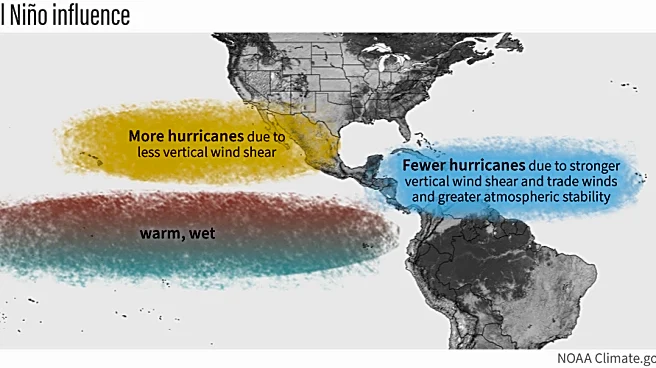
significantly lower than the average season, which typically sees about 14 named storms, seven hurricanes, and three major hurricanes. This adjustment is attributed to the strengthening El Niño phenomenon, which is expected to dominate the tropical circulation during the peak of the hurricane season. El Niño conditions create vertical wind shear that generally inhibits hurricane formation. The CSU team initially predicted a below-average season with 13 named storms, six hurricanes, and two major hurricanes. The current forecast suggests a 17% chance of a major hurricane making landfall along the U.S. coastline, compared to the historical average of 43%.
Why It's Important?
The forecast of a below-normal hurricane season is significant for several reasons. It suggests a reduced risk of hurricane-related damage along the U.S. coastline, which could lead to lower insurance claims and less economic disruption in affected areas. This is particularly relevant for industries such as insurance, real estate, and agriculture, which are often heavily impacted by severe weather events. Additionally, a quieter hurricane season could provide relief to communities still recovering from past storms. However, the unpredictability of weather patterns means that stakeholders must remain vigilant and prepared for any unexpected developments.
What's Next?
As the hurricane season progresses, meteorologists and emergency management officials will continue to monitor weather patterns closely. The potential for a strong El Niño could influence not only the Atlantic hurricane season but also global weather patterns, affecting agriculture, water resources, and energy consumption. Communities in hurricane-prone areas are advised to maintain preparedness plans and stay informed about any changes in forecasts. The insurance industry, in particular, will be watching closely to adjust risk assessments and policy pricing accordingly.