


What's Happening?
There is often confusion regarding the terms 'England,' 'Great Britain,' and the 'United Kingdom,' which are frequently used interchangeably but refer to distinct geographical and political entities. The United Kingdom (UK) is a sovereign state composed
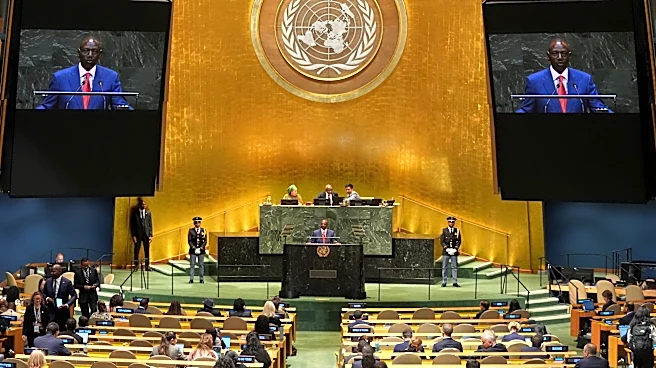
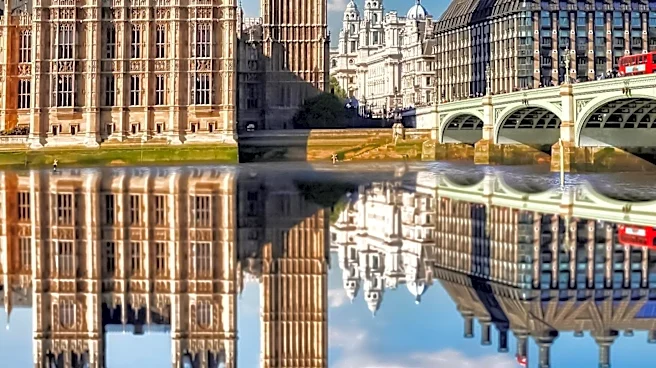
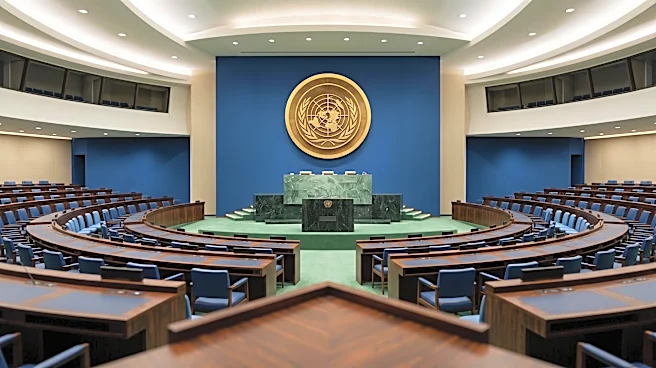
of four nations: England, Scotland, Wales, and Northern Ireland. It is governed by a central government in London, though its constituent countries possess some devolved law-making powers. England, while a country, is not a sovereign state and cannot establish its own border policy or hold a seat at the United Nations. It is the largest of the UK's four countries, housing nearly 56 million of the UK's 66 million inhabitants, with London serving as its capital and the seat of the UK government. Great Britain, on the other hand, is a landmass that includes England, Scotland, and Wales, but it is not a country and lacks governmental powers.
Why It's Important?
Clarifying the distinctions between England, Great Britain, and the United Kingdom is crucial for accurate geopolitical understanding and international relations. The precise terminology impacts how foreign governments, including the U.S., interact with the region, particularly concerning trade agreements, diplomatic protocols, and cultural exchanges. Misunderstandings can lead to misinterpretations of political authority and national identity. For instance, while England is a significant part of the UK, it does not independently conduct foreign policy or defense, which are functions of the sovereign UK government. This differentiation is vital for U.S. businesses and policymakers engaging with the region, ensuring they address the correct governmental or geographical entity for their objectives. The historical evolution of these terms also reflects centuries of political unification and separation, influencing contemporary national sentiments and regional autonomy debates within the UK.
What's Next?
Continued efforts to educate the public and international partners on these distinctions will likely persist, especially as global interactions become more frequent and nuanced. Educational initiatives and clear communication from official bodies will be essential to prevent ongoing confusion. For instance, when discussing U.S.-UK relations, it is important to refer to the 'United Kingdom' as the sovereign state rather than 'England' to accurately reflect the scope of agreements and partnerships. Similarly, cultural and tourism promotions might continue to highlight the unique identities of England, Scotland, Wales, and Northern Ireland while acknowledging their place within the broader UK framework. The ongoing political landscape within the UK, including discussions around devolution and national identity, will also keep these distinctions relevant in public discourse.
Beyond the Headlines
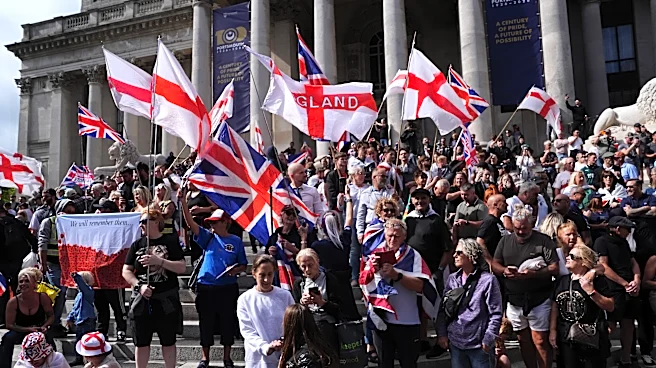
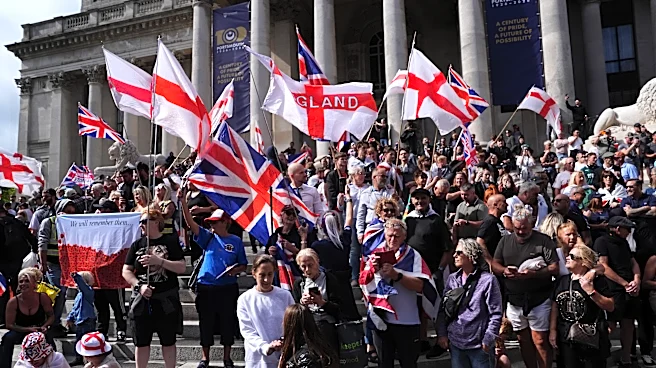
The interchangeable use of these terms highlights a broader challenge in geographical and political literacy, where historical and administrative complexities are often oversimplified. This linguistic imprecision can inadvertently diminish the distinct identities and contributions of Scotland, Wales, and Northern Ireland within the United Kingdom. For example, referring to the entire UK as 'England' can overlook the unique cultural, legal, and political systems that exist in the other constituent nations. This has implications for national identity and regional pride, potentially fueling sentiments for greater autonomy or even independence, as seen in historical and ongoing debates in Scotland and Northern Ireland. Understanding these nuances is not merely an academic exercise but is fundamental to appreciating the intricate tapestry of the UK's political and social landscape.