



What's Happening?
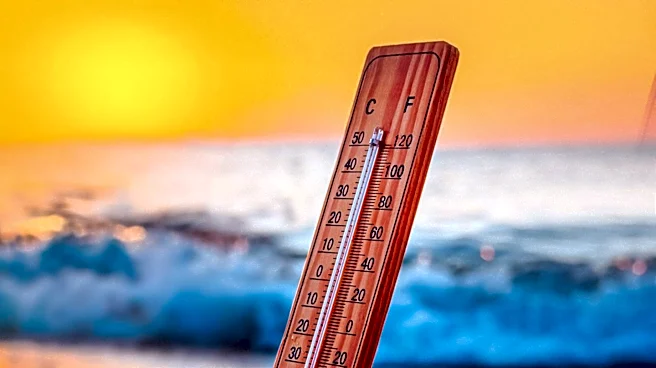
The National Weather Service has issued its first-ever heat advisory for Anchorage and large parts of Southcentral Alaska, with temperatures expected to reach the upper 70s or higher through the weekend. The advisory, effective from Friday afternoon to Sunday
evening, covers Anchorage, Mat-Su, the Kenai Peninsula, and portions of the Copper River Valley. This marks a significant change as the region is not accustomed to such warm weather, and many homes lack air conditioning. The advisory follows a decision by the weather service in May to begin issuing heat advisories in response to increasingly warm conditions. The Fairbanks and Juneau offices have been issuing similar advisories since last year. The advisory aims to help residents manage the heat, which poses health risks due to the state's infrastructure and residents' lack of acclimatization to higher temperatures.
Why It's Important?
This development highlights the growing impact of climate change on regions traditionally known for cooler climates. The issuance of a heat advisory in Alaska underscores the need for infrastructure adaptation and public health preparedness in response to changing weather patterns. The advisory serves as a warning to residents about potential health risks, emphasizing the importance of staying cool and hydrated. It also reflects a broader trend of increasing temperatures in northern regions, which could have long-term implications for local ecosystems, wildlife, and human activities. The advisory's issuance is a proactive measure to mitigate health risks and raise awareness about the changing climate.
What's Next?
As temperatures are expected to drop after the weekend, the focus will shift to managing the immediate impacts of the heat advisory. Residents are advised to take precautions, such as staying in shaded or air-conditioned areas and staying hydrated. The weather service will continue to monitor conditions and provide updates as necessary. In the long term, this event may prompt discussions on infrastructure improvements, such as the installation of air conditioning in homes and public buildings, to better prepare for future heat events. Additionally, it may lead to increased research and policy discussions on climate adaptation strategies in Alaska.