
What's Happening?
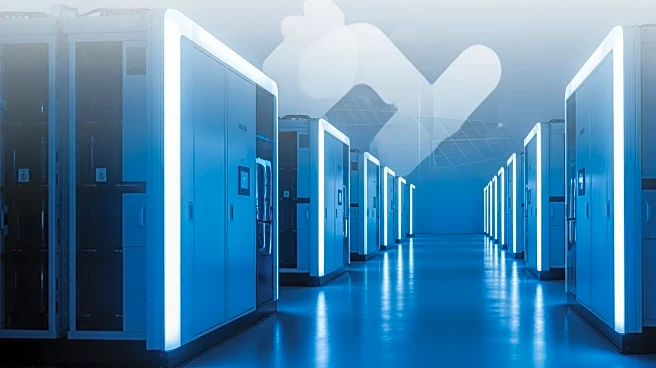
California has reached a significant milestone in its renewable energy efforts by achieving a record battery storage capacity of 16,942 MW, as announced by the California Energy Commission. This development
marks a 2,100% increase since 2019, with contributions from utility-scale projects, residential batteries, and installations at businesses and government facilities. The state has managed to avoid Flex Alerts for three consecutive years, even during extreme weather conditions, by effectively capturing excess solar and wind energy. Despite setbacks from the Trump administration's policies, which included the elimination of federal renewable energy incentives, California continues to lead the U.S. in battery storage capacity, second only to China globally.
Why It's Important?
The expansion of battery storage is crucial for California's goal of achieving 100% clean electricity by 2045. The state's progress in this area not only supports its renewable energy targets but also enhances grid reliability and reduces the risk of power outages. By joining the Global Energy Storage and Grids Pledge, California is positioning itself as a leader in global energy storage initiatives. This development is significant for the renewable energy industry, as it demonstrates the potential for large-scale battery storage to support clean energy transitions, even in the face of policy challenges.
What's Next?
California's continued investment in battery storage and renewable energy infrastructure is expected to drive further advancements in clean energy technology. The state's commitment to eliminating coal power by the end of 2025 and its leadership in global energy storage initiatives suggest ongoing progress towards its 2045 clean electricity goal. Stakeholders, including government agencies and private sector partners, will likely focus on expanding grid capacity and integrating more renewable energy sources to meet future demand.