








What's Happening?
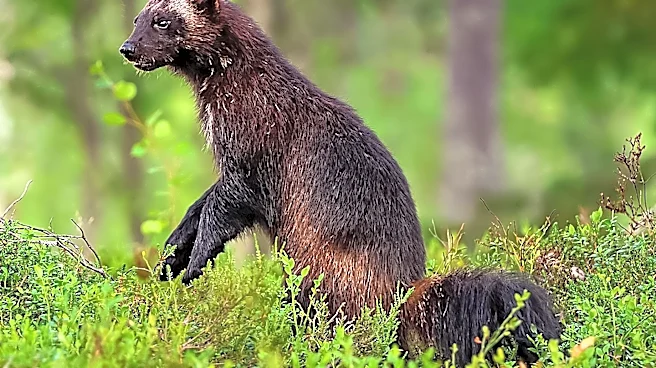
Biologist Jim Halfpenny has presented findings indicating that the population of wolverines in Yellowstone National Park is significantly higher than previously reported. According to Halfpenny, who has been studying these elusive creatures for nearly
50 years, there are at least 31 verified wolverines in the park over the last five years, with a total of 83 verified since 1990. This contrasts with the National Park Service's earlier report of only seven documented wolverines from 2006 to 2009. Halfpenny's research, based on verified evidence such as photographs and DNA samples, aims to correct the wolverine's negative public image and highlight their true nature. His work has involved collaboration with commercial fur trackers and the use of modern technology like radio collars and DNA sampling to track and study wolverines.
Why It's Important?
The revelation of a larger wolverine population in Yellowstone has significant implications for wildlife conservation and management strategies in the park. Understanding the true number of wolverines can influence conservation policies and efforts to protect this species, which has been historically misunderstood and nearly hunted to extinction. The findings also underscore the importance of using modern scientific methods and citizen science to gather accurate wildlife data. This could lead to more informed decisions regarding the species' conservation status and habitat protection, potentially impacting tourism and local ecosystems.
What's Next?
The next steps involve continued monitoring and verification of wolverine populations in Yellowstone. Halfpenny encourages the use of citizen science, urging visitors to document sightings with photographs to aid in ongoing research. This approach could enhance the understanding of wolverine behavior and distribution, contributing to more effective conservation strategies. Additionally, the findings may prompt discussions among conservationists and policymakers about the potential need for revised management plans to ensure the species' long-term survival in the park.