







What's Happening?
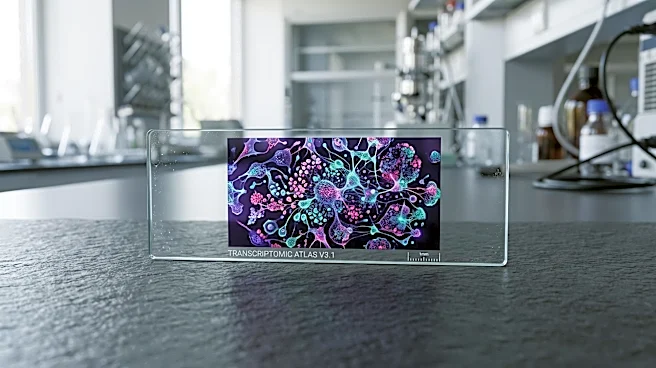
Researchers at Vanderbilt-Ingram Cancer Center have created one of the largest transcriptomic maps of breast cancer ever assembled, integrating data from over 7,600 tumors across 22 independent studies. This new molecular atlas, published in Cell Reports
Medicine, identifies novel forms of the disease and provides a foundation for selecting personalized treatments based on a tumor's molecular characteristics rather than traditional pathology alone. Dr. Brian Lehmann, Research Associate Professor of Medicine at Vanderbilt Health and corresponding author, noted that the atlas reveals substantial biological diversity within traditional breast cancer categories, uncovering previously hidden forms of breast cancer with different prognoses, biology, and treatment sensitivities. The researchers adapted computational approaches from single-cell genomics to integrate diverse datasets, grouping breast cancers into interconnected clusters that share common molecular features, treatment responses, and clinical outcomes.
Why It's Important?
This breast cancer atlas is crucial for advancing precision oncology, as it addresses the limitations of current classification systems that do not fully capture the clinically relevant differences among tumors. By providing an unprecedented view of the disease's molecular diversity, the atlas enables a more nuanced understanding of breast cancer, potentially leading to more effective and targeted therapies. For instance, it reveals that estrogen receptor-low breast cancers behave more like ER-negative disease, suggesting different treatment considerations, and identifies subsets of HER2-positive tumors that could benefit from specific HER2 kinase inhibitors. The discovery of a hidden neuroendocrine form of breast cancer with worse outcomes and a potential therapeutic target (FGFR1) highlights the atlas's capacity to uncover new treatment opportunities. This research aims to move beyond 'one-size-fits-all' approaches, ultimately improving patient outcomes by matching therapies to the unique biology of individual tumors.
What's Next?
The immediate next critical step for the Vanderbilt Health researchers is prospective testing to determine whether treatment decisions guided by these transcriptional subtypes improve patient outcomes. They envision that a patient's tumor could eventually be positioned on this molecular map to identify the most appropriate therapies and to improve treatment selection for clinical trials. In addition to developing the atlas, the researchers have created a tool that can assign tumors to subtypes using standard bulk RNA sequencing data, which will guide future research studies and clinical trials. Beyond breast cancer, the computational approach developed for this atlas can be applied to integrate transcriptomic, proteomic, and other large-scale molecular datasets across a wide range of diseases, suggesting broader implications for precision medicine in other cancer types and conditions.
Beyond the Headlines
The creation of this breast cancer atlas signifies a paradigm shift in how cancer is understood and treated, moving towards a highly individualized approach. This deeper understanding of molecular diversity has ethical implications regarding access to advanced diagnostic tools and personalized treatments, ensuring that all patients can benefit from these innovations. Legally, the integration of such complex genomic data into clinical practice will require robust regulatory frameworks for diagnostic tests and therapies. Culturally, this research fosters a greater appreciation for the intricate biological mechanisms underlying disease, potentially leading to more informed patient-doctor discussions and shared decision-making. In the long term, this approach could accelerate drug discovery and development by identifying novel therapeutic targets and improving the design of clinical trials, ultimately leading to more effective and less toxic cancer treatments.