
What's Happening?
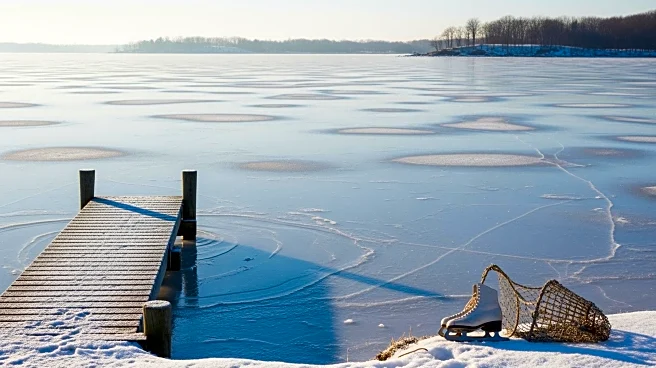
During the winter of 2025-2026, the Chesapeake Bay experienced significant ice coverage, with approximately 38 percent of the bay frozen on February 9 and 10, according to U.S. National Ice Center ice charts.
This level of ice coverage allowed for unusual winter activities such as ice boating on the frozen Claiborne Cove of Maryland’s Eastern Shore. However, the ice also posed challenges for local watermen, trapping boats and limiting access to the bay, which is crucial during the peak oyster season. Historical comparisons were made to the winter of 1976-1977, when ice coverage was even more extensive, reaching 85 percent of the bay. The ice conditions during that period caused high mortality rates in shellfish and damaged infrastructure such as piers and marinas.
Why It's Important?
The ice coverage on the Chesapeake Bay has significant implications for the local economy and environment. For watermen, the ice presents a barrier to accessing the bay, which can impact their livelihoods, particularly during the oyster season. The ice also affects the local ecosystem, as seen in the past with high shellfish mortality rates. On the other hand, the ice coverage provides opportunities for winter sports enthusiasts, which can attract tourism and boost local businesses catering to these activities. The situation highlights the delicate balance between economic activities and environmental conditions in the region.
What's Next?
As the winter progresses, the extent of ice coverage on the Chesapeake Bay will continue to be monitored. Local authorities and watermen may need to adapt their strategies to cope with the challenges posed by the ice. This could involve seeking assistance for icebreaking operations or finding alternative methods to access the bay. Additionally, the situation may prompt discussions on climate patterns and their impact on local industries and ecosystems.