



What's Happening?
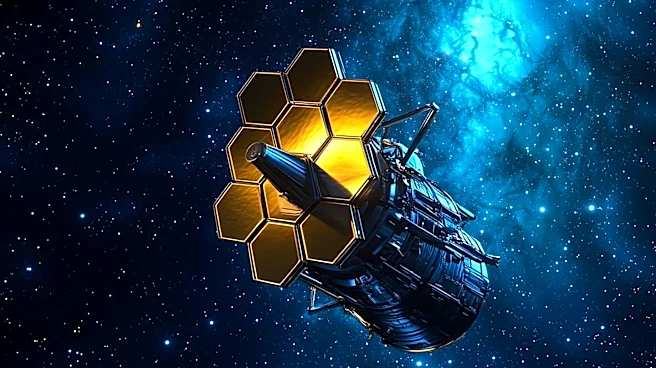
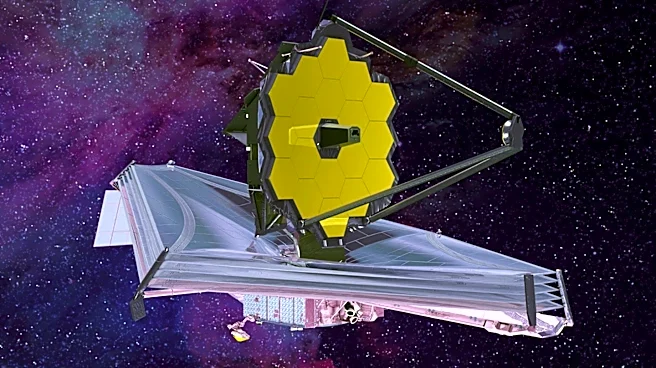
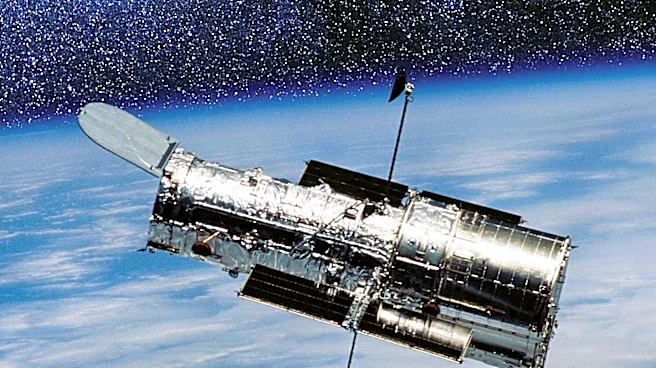
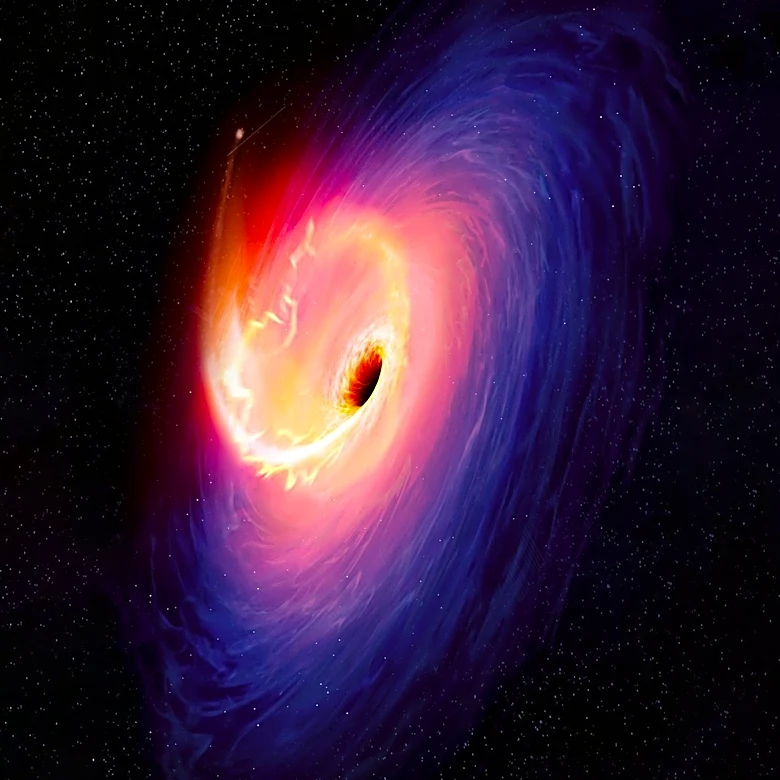
NASA's Hubble Space Telescope, in collaboration with the James Webb Space Telescope, has identified a stellar-mass black hole in the Omega Centauri star cluster. This discovery marks the first detection of such a black hole in the cluster, which is composed
of 10 million stars. The research team used astrometry to measure the small movements of stars over time, leading to the identification of a star orbiting an invisible object, confirmed to be a black hole. This finding challenges previous models that suggested the presence of about 10,000 smaller black holes in the cluster. The black hole, named oMEGACat BH-2, has a lower-than-expected mass and the longest orbital period of any known black hole binary system.
Why It's Important?
The discovery of oMEGACat BH-2 provides new insights into black hole formation and the dynamics within star clusters like Omega Centauri. Understanding these black hole populations is crucial for interpreting gravitational wave events, as such environments are believed to be where binary systems merge and create these waves. The findings also challenge existing theories about black hole formation in metal-poor environments, prompting further research into the processes that allow such formations. This discovery could refine current astrophysical models and enhance our understanding of the universe's fundamental structures.
What's Next?
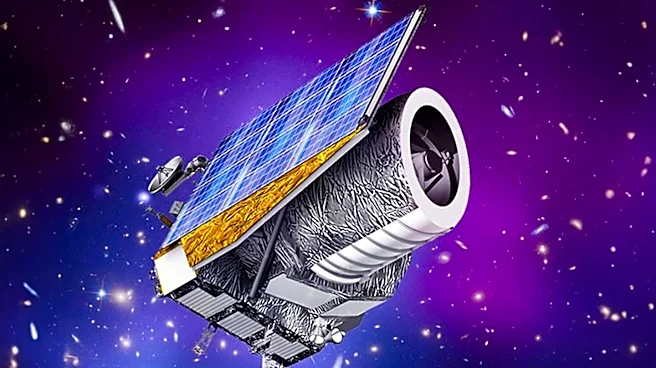
The research team plans to continue using Hubble and Webb data to search for similar systems in other star clusters. The upcoming launch of NASA's Nancy Grace Roman Space Telescope is expected to aid in this search, offering high-resolution imaging and a wider field of view. This ongoing research aims to uncover more about the elusive black hole populations in globular clusters, potentially leading to breakthroughs in our understanding of cosmic phenomena.