



What's Happening?
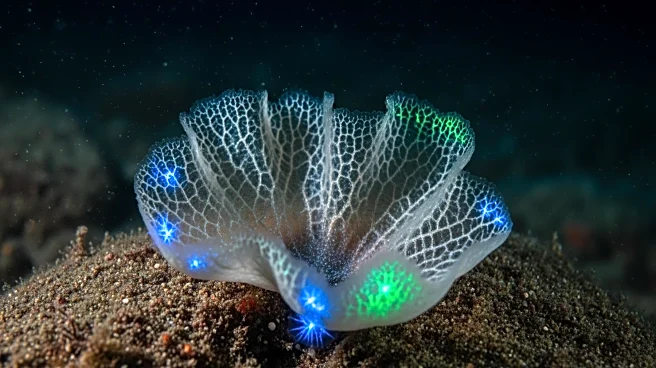
Researchers from The Nippon Foundation's Nekton Ocean Census, in collaboration with the Schmidt Ocean Institute, have discovered a new species of carnivorous sea sponge in the Southern Ocean. This discovery was made possible after an iceberg, A-84, broke
away from the George VI Ice Shelf, exposing previously hidden seafloor. The team used a remotely operated vehicle to explore this newly accessible area, uncovering a variety of deep-sea species, including the carnivorous sponge. This sponge, part of the Cladorhizidae family, captures and digests small crustaceans using tiny hooked structures on its nearly spherical body. The expedition also documented other unique species, such as bone-eating worms and various organisms living around hydrothermal vents.
Why It's Important?
The discovery of the carnivorous sea sponge and other deep-sea species highlights the rich biodiversity of the Southern Ocean, a region that remains largely unexplored. These findings are crucial for understanding how polar ecosystems function and respond to environmental changes, such as warming temperatures and shifting currents. The data collected can inform conservation efforts and help predict how these ecosystems might cope with future challenges. Additionally, the discovery underscores the importance of continued exploration and research in remote oceanic regions, which are often overlooked in conservation planning due to limited data.
What's Next?
The research team plans to continue analyzing the samples collected during the expedition to identify and describe more new species. This ongoing work will contribute to a better understanding of the Southern Ocean's biodiversity and the ecological roles of its inhabitants. The findings may also influence future conservation policies and strategies aimed at protecting these fragile ecosystems from threats such as climate change and industrial activities. Further expeditions are likely to be planned to explore other uncharted areas of the Southern Ocean, potentially revealing even more unknown species.
Beyond the Headlines
The discovery of the carnivorous sea sponge and other deep-sea species raises questions about the adaptability and resilience of life in extreme environments. These organisms have evolved unique survival strategies, such as carnivory and symbiotic relationships, to thrive in nutrient-poor and harsh conditions. Understanding these adaptations can provide insights into the limits of life on Earth and inform the search for life in similar extreme environments on other planets. Additionally, the findings highlight the potential for discovering new compounds and materials with applications in biotechnology and medicine.