





What's Happening?
The District of Columbia's Chief Financial Officer has released revised revenue estimates for the District's Budget and Financial Plan. The forecast indicates an increase of $205 million for Fiscal Year (FY) 2026 compared to earlier February estimates.
However, projections for subsequent years show a decline, with revenue expected to be down $155 million in FY27 and $144 million in FY28. The FY26 gains are largely attributed to a rising stock market. In contrast, the projected losses in FY27 and FY28 reflect a softening local jobs market, particularly in the wake of federal job losses. Of the additional FY26 revenue, $150 million will be allocated to replenish the District’s cash flow reserve funds, which were utilized by the Council in passing the FY27 budget.
Why It's Important?
These revised revenue estimates are critical for the District of Columbia's fiscal planning and highlight the economic vulnerabilities tied to both national market trends and local employment conditions. The reliance on a rising stock market for FY26 gains underscores the volatility that can impact municipal budgets. More significantly, the projected decline in future years due to a softening local job market, especially federal job losses, points to a structural challenge for the District's economy. This situation necessitates a strategic focus on economic diversification and job creation to mitigate the impact of a changing federal footprint. The replenishment of reserve funds, while prudent, also indicates the need for fiscal discipline in the face of anticipated revenue shortfalls.
What's Next?
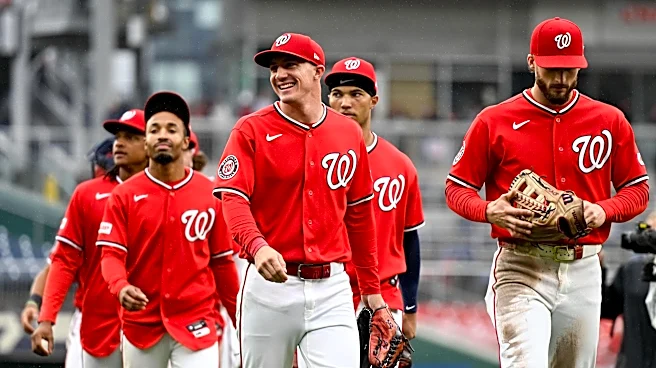
Mayor Bowser has emphasized the urgent need to create jobs and diversify the District's economy to address the impacts of a changing federal presence. The administration plans to focus on investments and policies that drive growth, particularly by leaning into successful sectors like hospitality, tourism, sports, and entertainment. These industries are expected to help the District continue making investments in key priorities such as education, public safety, core government services, and healthcare programs. The Mayor's statement indicates a commitment to avoiding increased spending that outpaces revenue growth and to refrain from taxing the way back to a thriving economy. The upcoming budget cycles will likely reflect these priorities, with a strong emphasis on economic development initiatives.
Beyond the Headlines
The District of Columbia's revenue challenges extend beyond immediate budgetary concerns, touching upon the long-term economic identity of the nation's capital. Historically, the federal government has been a stable economic anchor, but a 'changing federal footprint' suggests a need for greater economic independence and resilience. This situation could accelerate efforts to foster a more diverse private sector, potentially transforming the city's economic landscape. The focus on tourism, sports, and entertainment also highlights a strategic shift towards leveraging the District's unique cultural and historical assets. However, this transition also brings challenges, such as ensuring equitable economic opportunities for all residents and managing the potential social impacts of rapid economic diversification.