




What's Happening?
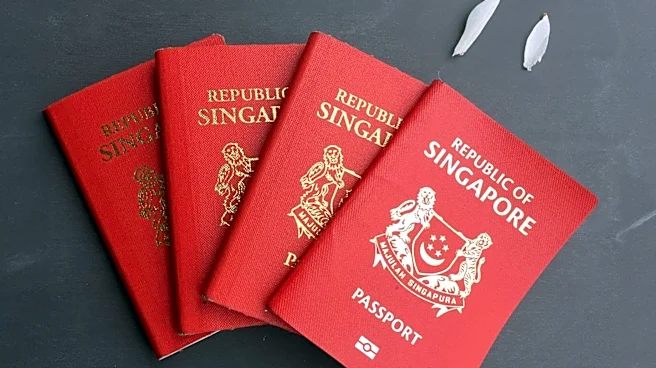
The Henley Passport Index's 20th-anniversary report reveals a significant shift in global passport rankings, with the United States now in 10th place, down from its top position in 2006. Singapore currently holds the most powerful passport, allowing visa-free
access to 192 destinations. The United Arab Emirates has made a remarkable ascent to second place, tied with Japan and South Korea, each offering access to 188 destinations. The index highlights the geopolitical capital of nations, with passport power reflecting a country's diplomatic relationships and international standing.
Why It's Important?
The decline in the U.S. passport's ranking signifies a shift in global power dynamics, where traditional Western leaders are losing ground to Asian and Middle Eastern countries. This change impacts international travel, trade, and diplomatic relations, as countries with stronger passports can facilitate easier movement for their citizens, enhancing economic opportunities and cultural exchanges. The UAE's rise underscores the effectiveness of strategic diplomatic and trade agreements in boosting a country's global mobility. The U.S. and other Western nations may need to reassess their diplomatic strategies to maintain their influence in global mobility.
What's Next?
Countries may focus on strengthening diplomatic ties and negotiating more visa-waiver agreements to improve their passport rankings. The U.S. might explore new diplomatic strategies to regain its position in the global mobility landscape. The travel industry could see shifts in tourist flows, with countries offering greater mobility becoming more attractive destinations. As global peacefulness continues to decline, countries with stable political environments and strong international relations are likely to maintain or improve their passport rankings, influencing future travel and economic trends.
Beyond the Headlines
The disparity in passport power raises questions about global inequality and access to opportunities. The ability to travel freely is a reflection of a country's geopolitical standing and international reputation, affecting individuals' access to education, employment, and cultural exchange. This inequality can perpetuate global disparities, highlighting the need for international cooperation and governance to address these challenges. The relationship between peacefulness and passport power suggests that countries with stable political environments and strong institutions are more likely to offer greater travel freedom.