



What's Happening?
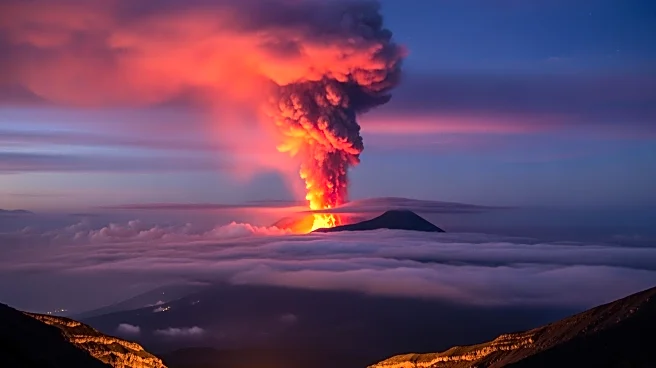
An international report has been released detailing the atmospheric impacts of the Hunga volcano eruption in January 2022. The eruption, which occurred in the tropical Pacific, was significant for its release of vaporized seawater into the stratosphere,
comparable in scale to the historic Krakatoa eruption. The report, involving over 100 scientists, highlights that the eruption increased global stratospheric water vapor by about 10%, leading to a cooling effect in the stratosphere. Despite affecting stratospheric ozone in the Southern Hemisphere, the eruption's impact on the Antarctic ozone hole and surface climate was minor. The findings underscore the importance of global cooperation in monitoring such rare geophysical events.
Why It's Important?
The Hunga eruption provides critical insights into how water-rich volcanic eruptions can influence the stratosphere and climate. Unlike typical eruptions that warm the stratosphere, Hunga's cooling effect challenges existing models and emphasizes the need for comprehensive monitoring. The eruption's impact on stratospheric chemistry and dynamics could have long-term implications for climate science, particularly in understanding the interactions between volcanic activity and climate change. The report's findings are crucial for informing future climate projections and ensuring that international agreements like the Montreal Protocol remain effective in protecting the ozone layer.
Beyond the Headlines
The Hunga eruption's unique characteristics, such as its high water vapor content, highlight the complexity of volcanic impacts on the atmosphere. The eruption's effects on stratospheric chemistry could persist for years, influencing both natural and human-caused climate variability. This underscores the importance of continued research and international collaboration in atmospheric science. The report also serves as a reminder of the potential for unexpected natural events to disrupt climate systems, reinforcing the need for robust scientific infrastructure to monitor and respond to such occurrences.