

What's Happening?
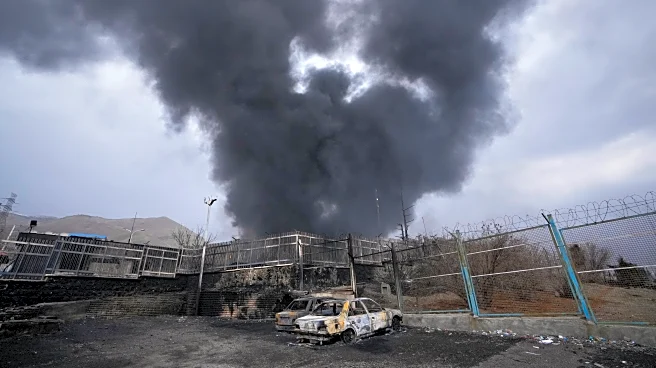
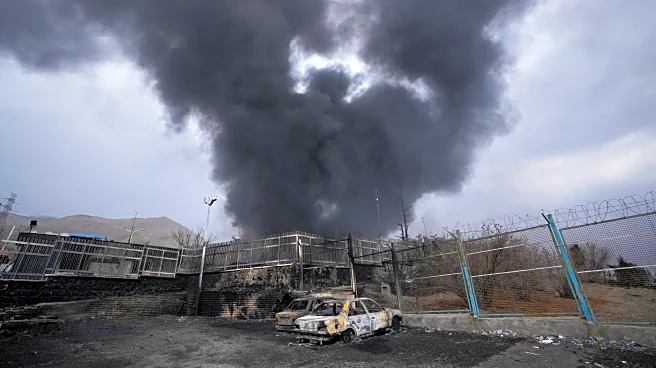
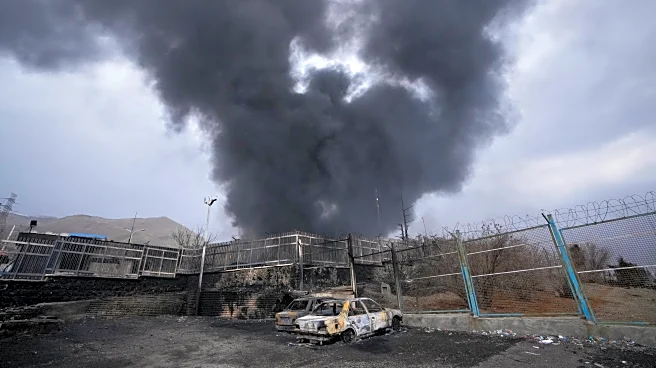
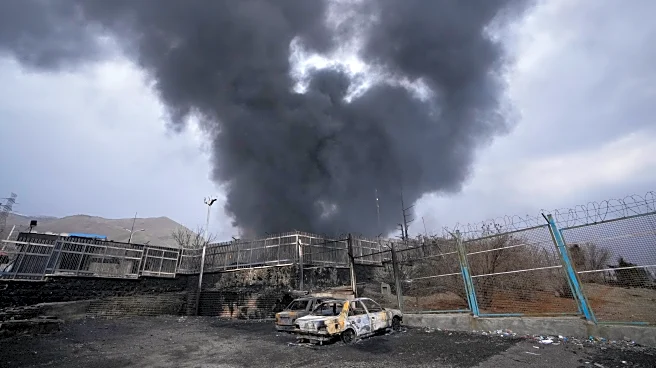
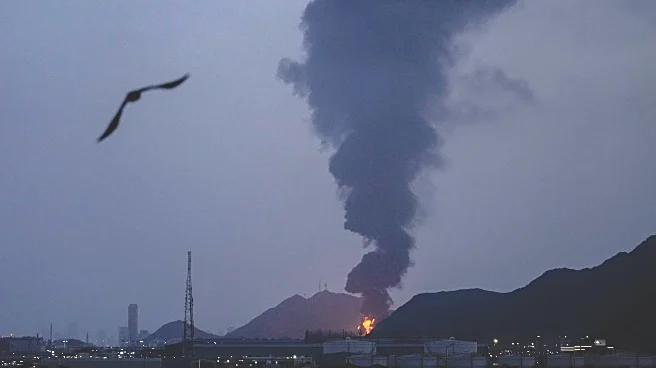
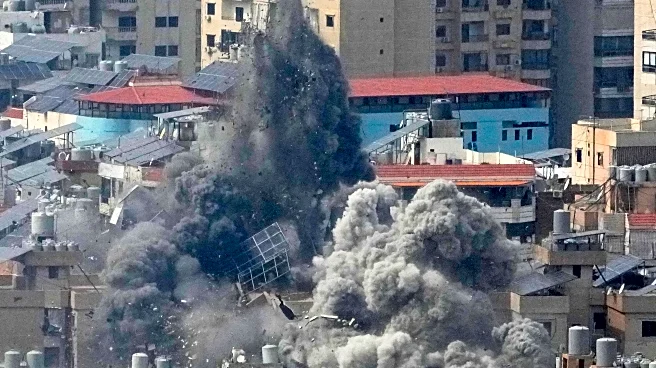
The U.S. and Israeli military actions in Iran have led to a significant escalation in regional conflict, with widespread global implications. President Trump has described the conflict as a 'short term excursion,' but the situation has rapidly expanded,
drawing in multiple international actors. The conflict has resulted in a surge in oil prices, reaching nearly $120 a barrel before dropping below $90. The fighting has also affected air traffic and threatened critical infrastructure in the Middle East, such as desalination facilities. The conflict has displaced half a million people in Lebanon and led to retaliatory strikes by Iran on U.S. allies across the Persian Gulf. The U.S. has faced military resistance and the conflict has destabilized the oil trade, affecting global markets and shifting geopolitical dynamics.
Why It's Important?
The conflict has significant implications for global energy markets and geopolitical stability. The surge in oil prices affects economies worldwide, particularly those reliant on Middle Eastern oil. The conflict has also strained U.S. relations with other major powers, such as China and Russia, and has drawn in a slew of international allies. The situation has reignited proxy battles and shifted dynamics between the U.S. and other major powers. The conflict's expansion has raised concerns about broader regional instability and the potential for further escalation. The U.S. administration faces criticism for its role in the conflict and the economic impact on American consumers, with rising fuel prices and increased war costs.
What's Next?
The conflict's resolution remains uncertain, with President Trump insisting on a 'short term' engagement. However, the ongoing military actions and retaliatory strikes suggest a prolonged conflict. The U.S. administration may face increasing pressure to de-escalate the situation and address the economic impact on global markets. International stakeholders, including European allies, may seek to mediate or intervene to stabilize the region. The conflict's continuation could lead to further displacement and humanitarian crises, necessitating international aid and intervention.
Beyond the Headlines
The conflict raises ethical and legal questions about international law and the justification for military actions. The involvement of multiple international actors highlights the complexity of modern warfare and the challenges of maintaining global peace and security. The situation underscores the interconnectedness of global markets and the potential for regional conflicts to have far-reaching consequences. The conflict may also influence future U.S. foreign policy and military strategy, as well as international relations and alliances.