







What's Happening?
U.S. farmer sentiment experienced a notable decline in September, with the Purdue University-CME Group Ag Economy Barometer Index falling to 123 points, down from 135 in August. This drop is primarily attributed to growing concerns among producers about
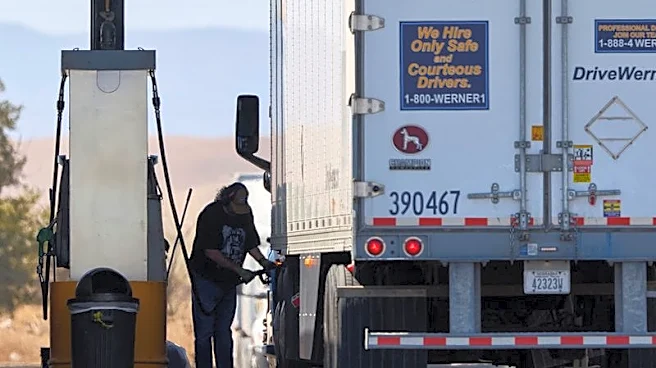
high input costs, such as diesel and fertilizer, which were identified as the biggest concern by a record 52% of respondents. Michael Langemeier, director of the Purdue Center for Commercial Agriculture, noted that more than half of the surveyed producers believe the U.S. is headed in the wrong direction. Approximately 54% of farmers stated that high input costs were the main obstacle to improving their farm's financial situation. This sentiment reflects a less optimistic outlook on near-term financial performance and a reduction in capital investment, despite some improvements in corn and soybean prices.
Why It's Important?
The decline in U.S. farmer sentiment, driven by escalating input costs, has significant implications for the agricultural sector and the broader U.S. economy. Agriculture is a foundational industry, and reduced farmer optimism can lead to decreased capital investment, potentially impacting future production levels and food supply chains. High input costs directly affect farmers' profitability, which can lead to financial strain and, in some cases, business closures. This situation could also translate into higher food prices for consumers if producers pass on increased costs. The sentiment that the U.S. is headed in the 'wrong direction' among a majority of farmers suggests a broader dissatisfaction with economic conditions and policy, extending beyond agricultural specifics. This could influence political discourse and policy decisions related to economic support for the agricultural sector.
What's Next?
The current trend suggests that farmers will continue to face challenges related to input costs in the near term. While the Long-Term Farmland Value Expectations Index reached a new high of 168, indicating long-term confidence in asset value, the immediate economic pressures are significant. Only 22% of producers anticipate their operations will be better off a year from now, with 35% expecting a worsening situation. This disparity between short-term concerns and long-term asset expectations highlights the need for strategies to address immediate operational costs. Policymakers may face increased pressure to implement measures that alleviate the financial burden on farmers, such as subsidies, tax breaks, or initiatives to stabilize energy and fertilizer prices. The ongoing monitoring of input costs and farmer sentiment will be crucial for understanding the resilience and future direction of the U.S. agricultural sector.
Beyond the Headlines
The divergence between short-term pessimism regarding farm profitability and long-term optimism about farmland value reveals a complex dynamic within the agricultural industry. This suggests that while operational challenges are pressing, there's an underlying belief in the enduring value of agricultural assets, possibly driven by factors like population growth, global food demand, and land scarcity. The widespread concern about the 'wrong direction' of the U.S. also points to a broader socio-economic unease among a critical demographic. This sentiment can influence rural voting patterns and support for political candidates who promise to address economic grievances. The situation underscores the vulnerability of the agricultural sector to external economic shocks and the need for robust risk management strategies, both at the individual farm level and through government policy.