

What's Happening?
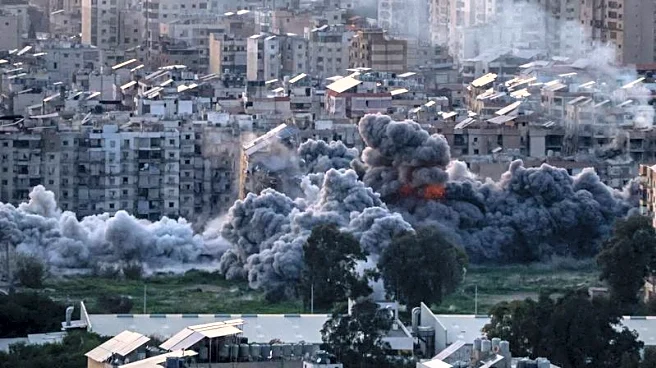
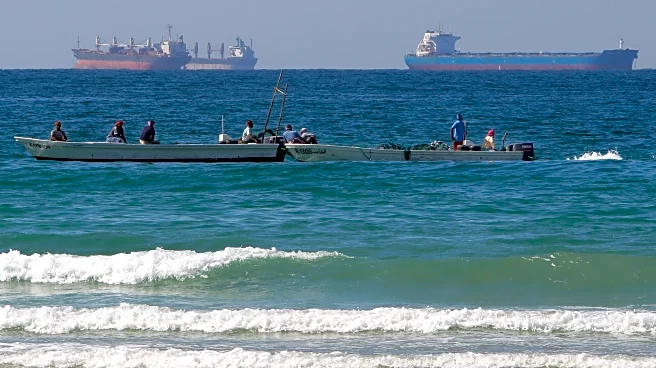
The oil market is experiencing significant turmoil as major Gulf oil producers, including the United Arab Emirates and Kuwait, have reduced their oil output due to the ongoing conflict in Iran, which has effectively closed the Strait of Hormuz. This strategic
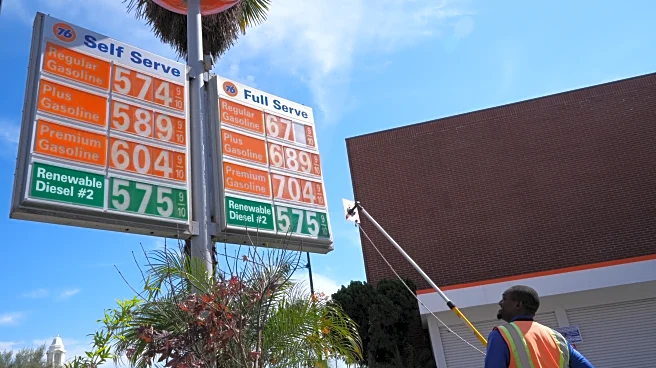
waterway, crucial for global oil transport, is currently impassable, leading to a substantial decrease in oil shipments. Iraq's oil production has plummeted by 60%, and Saudi Arabia is redirecting crude exports to its Red Sea coast to mitigate the impact. The conflict, now in its ninth day, has seen President Trump announce potential new targets in Iran, escalating tensions further. Oil prices have surged, with Brent crude nearing the $100-a-barrel mark, and other regional oil futures already surpassing this threshold.
Why It's Important?
The disruption in the Strait of Hormuz, a critical chokepoint for global oil supply, has significant implications for the global economy, particularly for oil-dependent regions. The reduction in oil supply is driving up prices, which could lead to increased costs for consumers and businesses worldwide. The U.S. has responded by offering financial protection and considering military escorts to ensure the safety of oil shipments. The situation poses a risk of prolonged high oil prices, which could impact inflation and economic stability. Import-dependent countries in Asia, such as Japan and South Korea, are already feeling the strain, with potential measures like tapping into national reserves and reinstating price caps being considered.
What's Next?
The ongoing conflict and blockade of the Strait of Hormuz are likely to continue affecting global oil markets. Analysts predict that the disruption could last for several weeks, with potential for further escalation if the conflict persists. The U.S. and its allies may increase military and financial interventions to stabilize the situation. Oil-importing countries may need to implement emergency measures to manage supply shortages and price increases. The situation remains fluid, with the potential for significant geopolitical and economic repercussions depending on the conflict's resolution.
Beyond the Headlines
The current crisis highlights the vulnerability of global oil supply chains to geopolitical conflicts, particularly in regions with critical infrastructure like the Strait of Hormuz. It underscores the need for diversified energy sources and increased investment in alternative energy to reduce dependency on volatile regions. The situation also raises ethical and strategic questions about the use of military force in securing energy resources and the long-term implications for international relations and global energy policy.