



What's Happening?
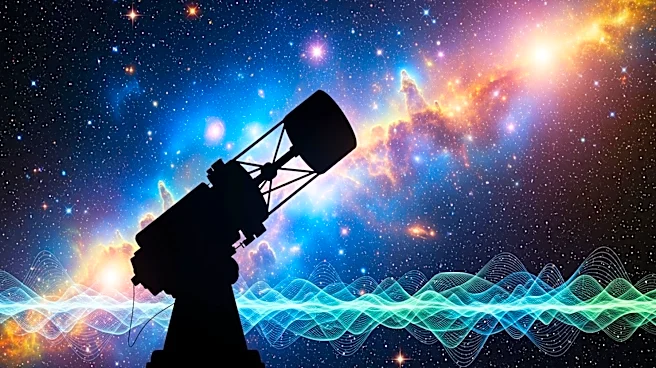
Astronomers are excited about the potential discovery of molecules that could indicate life on distant planets. However, confirming these findings is a complex process that can take years. Using telescopes to detect specific molecules in planetary atmospheres
and nebulae, astronomers have identified over 350 molecules in space. These molecules, some of which are precursors to biomolecules, offer hints about life's origins elsewhere in the cosmos. Despite the excitement, the process of vetting and correcting these observations is ongoing, especially for molecules with weak signals.
Why It's Important?
The discovery of molecules that could indicate life on other planets is crucial for understanding the potential for life beyond Earth. These findings could reshape our understanding of life's origins and the conditions necessary for life to thrive. However, the lengthy confirmation process highlights the challenges in astrochemistry and the need for precise and reliable data to support such groundbreaking discoveries.
What's Next?
As astronomers continue to refine their methods and technologies, the focus will be on improving the accuracy of molecular detections in space. This includes developing better models and laboratory techniques to simulate and confirm the presence of these molecules. The ongoing research will likely lead to more discoveries and a deeper understanding of the chemical processes that occur in space, potentially leading to the confirmation of life-supporting molecules on other planets.