




What's Happening?
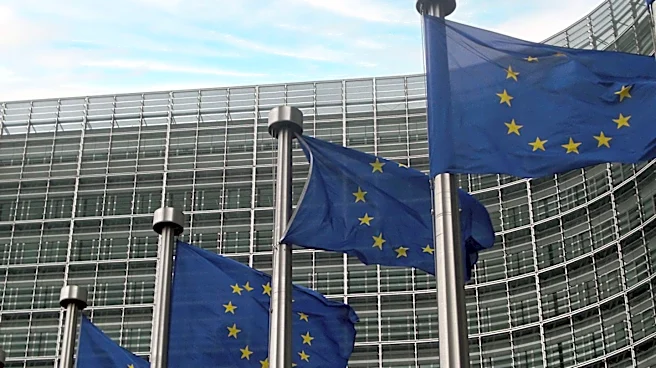
The European Union (EU) is actively implementing new tools to unlock climate finance for developing countries, aiming to make it more accessible, faster to deliver, and better targeted. A key initiative involves innovative financial instruments designed
to mobilize investment without increasing debt burdens. In Barbados, a $150 million European Investment Bank (EIB) guarantee, developed in collaboration with the Inter-American Development Bank and other partners, is enabling the national government to replace more expensive debt with lower-cost financing. This is projected to generate approximately $125 million in fiscal savings, which will be channeled into climate-resilient water and wastewater investments. This guarantee also incorporates the EIB's first Climate Resilient Debt Clause, offering greater repayment flexibility in the event of severe climate shocks.
Why It's Important?
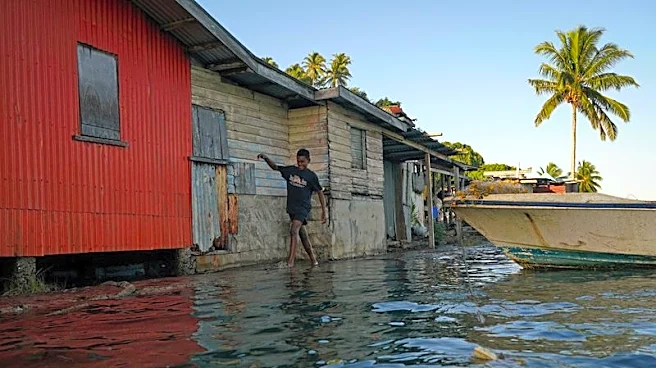
These EU initiatives are crucial for addressing the uneven distribution of climate finance, particularly benefiting Small Island Developing States (SIDS) and Least Developed Countries (LDCs) that are most vulnerable to climate change impacts. The Barbados case demonstrates how innovative financing can directly translate into tangible climate adaptation projects, such as improved water infrastructure, which are essential for resilience. By reducing the cost of debt and providing repayment flexibility, these mechanisms alleviate financial pressure on developing nations, allowing them to invest in critical climate action. This approach also aims to leverage public resources to attract private investment, recognizing that a global effort involving all actors and sources of finance, including the private sector, is necessary to meet the scale of the climate challenge.
What's Next?
The EU plans to continue its efforts to build pipelines of investment-ready projects and improve access to climate finance. Initiatives like the EU-EIB Global Gateway Support Facility and the Global Covenant of Mayors for Sub-Saharan Africa are supporting this goal. The EIB is also working with the European Commission to help SIDS, LDCs, and other vulnerable countries translate national adaptation priorities into investable projects. Furthermore, the EU's Global Green Bond Initiative (GGBI) aims to mobilize up to €20 billion in private capital for sustainable investment in partner countries through green bonds, fostering the development of robust domestic green bond markets. These ongoing efforts indicate a sustained commitment to scaling up climate finance and ensuring its effective deployment.
Beyond the Headlines
The development of innovative financial instruments like the Climate Resilient Debt Clause signifies a progressive evolution in international climate finance. It acknowledges the unique vulnerabilities of certain nations to climate shocks and provides a safety net that traditional financing mechanisms often lack. This approach not only facilitates climate action but also promotes financial stability in the face of increasing climate risks. The emphasis on local ownership and country-driven strategies, as supported by the Integrated National Financing Framework (INFF) Facility, suggests a move towards more effective and equitable climate solutions. This shift could lead to a more resilient global financial system that better integrates climate risk into its core operations and investment decisions.