




What's Happening?
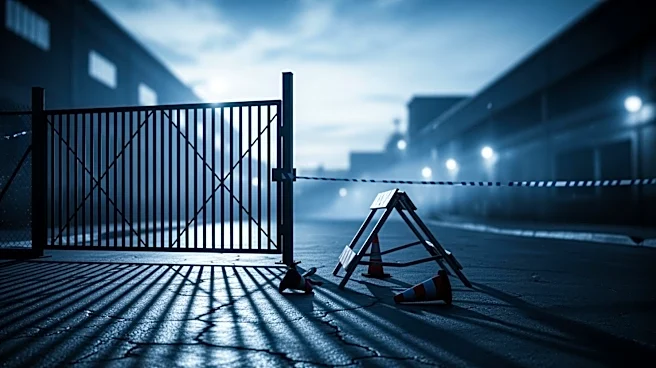
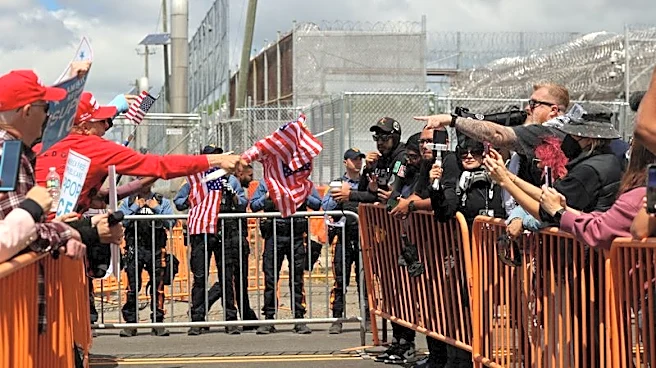
Newark officials have imposed a curfew around the Delaney Hall ICE detention center following escalating protests and clashes between law enforcement and demonstrators. The protests began after detainees at the facility launched a hunger and labor strike,
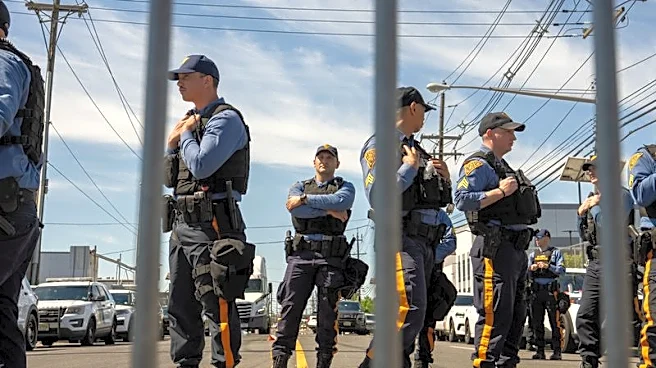
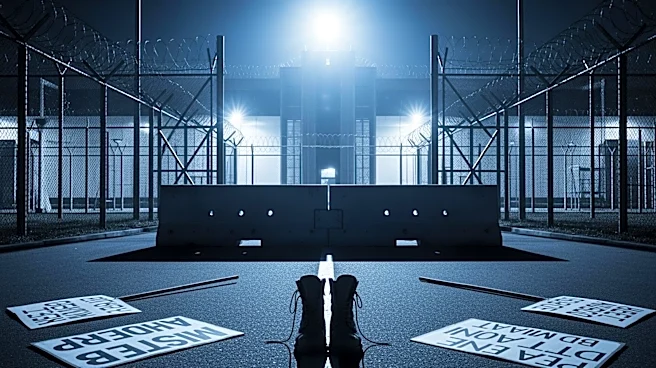
citing poor living conditions and alleged civil rights violations. The curfew, effective from 9 p.m. to 6 a.m., aims to manage the unrest and is accompanied by road closures and checkpoints. State police have been deployed to maintain order, and several arrests have been made, including individuals found with weapons. The protests have drawn attention to the Trump administration's immigration policies, with activists and families of detainees holding vigils and attempting to block ICE vehicles.
Why It's Important?
The situation at Delaney Hall highlights ongoing tensions surrounding U.S. immigration policies and the treatment of detainees. The protests underscore public dissatisfaction with the conditions in ICE facilities and the broader implications of immigration enforcement under the Trump administration. The involvement of state police and the imposition of a curfew reflect the seriousness of the unrest and the challenges in balancing public safety with the right to protest. The events could influence public opinion and policy discussions on immigration, potentially affecting future legislative actions and the operations of detention centers across the country.
What's Next?
The continuation of protests and the response from law enforcement will likely shape the next steps in this situation. Advocates are calling for improved conditions and transparency at Delaney Hall, as well as the facility's closure. The resumption of visitation for detainees, albeit with new restrictions, may impact the dynamics of the protests. Political leaders and advocacy groups will continue to monitor the situation, and any escalation could prompt further state or federal intervention. The outcome of these protests may influence broader immigration policy debates and the future of ICE operations in New Jersey and beyond.