



What's Happening?
Russian companies are anticipating large-scale layoffs in 2027 due to declining demand and a lack of economic recovery prospects, according to Alexander Shokhin, president of the Russian Union of Industrialists and Entrepreneurs. Many businesses are currently
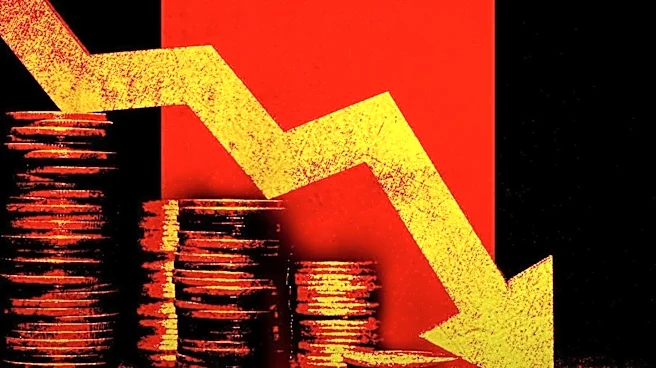
attempting to retain their workforces by implementing reduced workweeks, hoping for an economic rebound. However, if these expectations are not met, layoffs are expected. Several major Russian entities are already reducing staff, including the Magnitogorsk Iron and Steel Works, which is cutting 10% of its management, and Russian Railways, planning to cut 15% of its central office staff. The office software developer 'New Cloud Technologies' has reportedly laid off nearly 80% of its employees. Mass layoffs are also occurring at large banks like Sberbank and VTB. Some companies are exploring alternatives such as unpaid leave or part-time work, with 17.5% of surveyed companies considering these options. The most common cost-optimization strategy is reducing new hires. Consumer sentiment in Russia is deteriorating, confidence in the economy is declining, and anxiety is rising due to potential new mobilization waves, as reported by the Foreign Intelligence Service of Ukraine. The Russian economy, after three years of unexpected growth, is now facing a slowdown attributed to war expenses, inflation, and falling oil prices.
Why It's Important?
The impending mass layoffs in Russia signal a significant economic contraction that could have broader geopolitical and economic implications. A weakened Russian economy, struggling under the weight of war expenses, inflation, and sanctions, could impact global markets and supply chains, particularly in sectors where Russia is a key player, such as energy and raw materials. The decline in consumer lending to a six-year low further indicates a severe downturn in domestic demand, which will exacerbate the challenges faced by Russian businesses. This economic instability could lead to increased social unrest within Russia, potentially affecting the political landscape and the government's ability to sustain its current policies. For the U.S. and its allies, a struggling Russian economy might be seen as a validation of sanctions, but it also carries the risk of unpredictable actions from a regime under pressure. The situation highlights the long-term impact of international sanctions and military conflicts on national economies, demonstrating how sustained pressure can erode even seemingly resilient economic structures.
What's Next?
If the Central Bank of the Russian Federation maintains its tight monetary policy and the budget deficit remains substantial, economic growth in Russia for 2027 could turn negative or approach zero, according to Alexander Shokhin. He does not anticipate a reduction in the key interest rate until at least February of next year. Shokhin is advocating for the government to provide tax and credit relief to large enterprises, especially those in single-industry towns where these companies are primary employers. The ongoing economic challenges suggest that more companies will likely implement cost-cutting measures, including further staff reductions, salary cuts, or adjustments to benefits packages. The deteriorating consumer sentiment and declining confidence in the economy indicate that a recovery in domestic demand is unlikely in the near term. The Foreign Intelligence Service of Ukraine's report on growing anxiety over a potential new wave of mobilization could further impact labor availability and economic stability. The tax authorities' demand for the bankruptcy of a major shoe retail chain underscores the increasing financial distress among Russian businesses.
Beyond the Headlines
The anticipated mass layoffs in Russia extend beyond immediate economic concerns, touching upon deeper societal and political implications. The erosion of job security and declining living standards could fuel public discontent, potentially challenging the stability of the current political regime. The reliance on reduced workweeks and unpaid leave as temporary measures highlights a systemic issue where businesses are attempting to avoid immediate, drastic cuts, but this strategy is unsustainable in the long run. The focus on reducing new hires, while a common cost-optimization tactic, will likely lead to a 'brain drain' as skilled workers seek opportunities elsewhere, further hindering future economic recovery and innovation. The situation also underscores the ethical dilemma faced by companies operating in a sanctioned economy, balancing employee welfare with financial viability. The long-term impact on Russia's industrial capacity and technological development could be significant, as key sectors lose experienced personnel and investment. This economic downturn could also reshape Russia's global economic relationships, pushing it further towards non-Western markets and potentially altering global trade dynamics.