







What's Happening?
The U.S. Government Accountability Office (GAO) has released a report detailing potential policy options for federal and state lawmakers to foster a textile circular economy in the United States. The report emphasizes strategies such as repair, reuse,
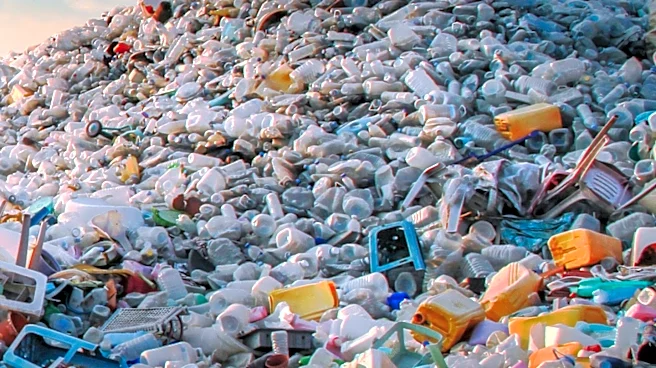
and recycling to extend the lifespan of textile materials. Key policy options identified by the GAO include extended producer responsibility (EPR) programs, which would hold companies accountable for their products post-consumer use, and tax incentives designed to reduce or offset business taxes for engaging in textile reuse or waste reduction. The GAO's findings suggest that a shift towards circularity could generate new jobs and markets in repair and recycling sectors, mitigate environmental damage, and influence consumer behavior. The agency noted that some U.S. states and other countries are already implementing or proposing similar policy options. Stakeholders interviewed for the report, including industry groups, largely favored a federal approach to ensure coordination, compliance, and consistent implementation across states, which would also help businesses navigate international legal requirements. The report defines textiles broadly, encompassing apparel, carpets, footwear, and towels, linking the policy discussion to the global increase in textile consumption and waste.
Why It's Important?
The GAO's report is significant as it provides a comprehensive framework for transitioning the U.S. textile industry towards a more sustainable model. The proposed policies, particularly EPR programs and tax incentives, could fundamentally alter how textile products are designed, manufactured, consumed, and disposed of in the United States. This shift has the potential to create new economic opportunities in recycling and repair, fostering innovation within the industry. Environmentally, reducing textile waste through circular practices could lead to a substantial decrease in landfill burden and pollution associated with textile production and disposal. For consumers, it might mean more durable products, increased access to repair services, and potentially new ways to dispose of old textiles responsibly. Businesses, especially manufacturers and retailers, would face new responsibilities and potentially new costs under EPR schemes, but could also benefit from tax credits and a more sustainable supply chain. The preference for a federal approach among industry stakeholders highlights the need for a unified national strategy to avoid a patchwork of state-specific regulations, which could create complexities for businesses operating across state lines.
What's Next?
The GAO's report serves as a foundational document for future legislative action at both federal and state levels. Lawmakers now have a detailed set of policy options to consider as they contemplate measures to promote a textile circular economy. The discussion around whether to adopt a federal or state-led approach will likely intensify, with industry groups advocating for national consistency. Future steps could involve congressional hearings, the introduction of new bills, or the development of pilot programs to test the efficacy of proposed policies like EPR and tax incentives. Businesses in the textile sector will need to monitor these developments closely and begin assessing how potential regulations might impact their operations, supply chains, and product lifecycles. Furthermore, collaboration between government, industry, and non-profit organizations will be crucial in developing the necessary infrastructure for textile collection, sorting, and processing to support a robust circular economy.
Beyond the Headlines
Beyond the immediate policy implications, the GAO's report touches upon broader societal and economic shifts. The move towards a textile circular economy challenges the traditional linear 'take-make-dispose' model, encouraging a more resource-efficient and environmentally conscious approach. This could lead to a re-evaluation of consumer culture, promoting durability and repair over fast fashion and disposability. Ethically, EPR programs place a greater burden of responsibility on producers, potentially incentivizing them to design products that are easier to recycle or reuse, thereby reducing their environmental footprint. Legally, implementing such policies would require careful consideration of existing regulations and potential new legal frameworks to ensure fair competition and effective enforcement. Culturally, it could foster a greater appreciation for material value and craftsmanship, moving away from a throwaway mentality. In the long term, a successful transition could position the U.S. as a leader in sustainable manufacturing and consumption, influencing global textile practices and contributing to broader climate and environmental goals.