






What's Happening?
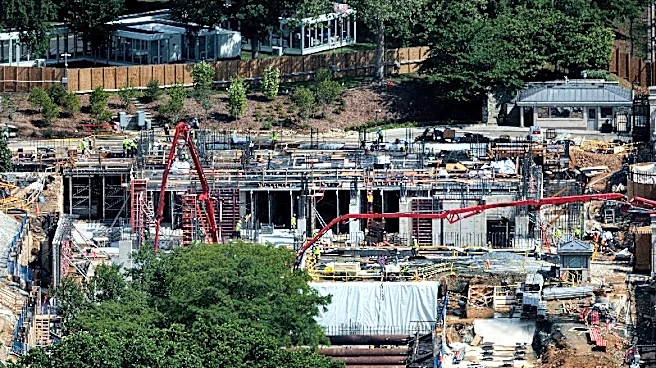
The Senate parliamentarian has ruled against a Republican proposal to allocate $1 billion for security enhancements at the White House, including President Trump's new ballroom. This decision is a setback for Republicans who aimed to include the funding
in a broader bill intended to finance immigration enforcement agencies. The parliamentarian's ruling, which is advisory but rarely ignored, stated that the proposal was too broad to fit within the narrow budget bill that requires only a simple majority to pass. Democrats, led by Senate Minority Leader Chuck Schumer, have opposed the inclusion of the ballroom project in the bill, arguing that federal resources should not be used for such purposes. Republicans, however, maintain that private donations will cover the ballroom costs, while federal funds are necessary for security improvements.
Why It's Important?
This development highlights the ongoing partisan tensions in Congress, particularly regarding budget allocations and the use of federal funds. The decision by the Senate parliamentarian underscores the procedural challenges Republicans face in advancing their legislative agenda without bipartisan support. The controversy also reflects broader debates over government spending priorities, with Democrats criticizing the focus on the ballroom project amid rising costs for Americans. The outcome of this legislative battle could influence future negotiations on budgetary matters and set precedents for how similar proposals are handled.
What's Next?
Republicans have indicated plans to revise the legislation in response to the parliamentarian's ruling. This may involve separating the security funding from the broader immigration enforcement bill or seeking alternative legislative strategies. Democrats have vowed to continue opposing the inclusion of the ballroom project in federal spending, suggesting that further political clashes are likely. The situation remains fluid, with potential implications for the broader immigration funding package and the legislative agenda in the Senate.