







What's Happening?
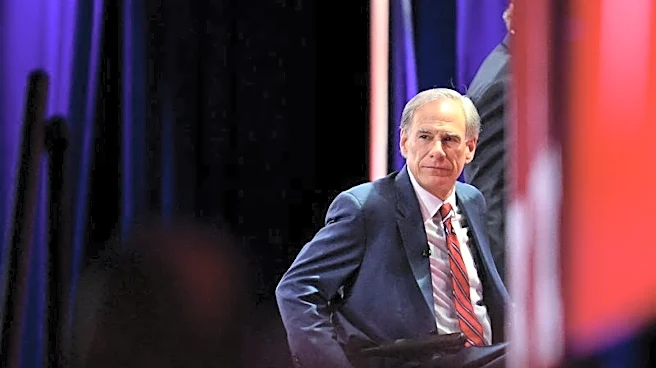
The Houston City Council has amended a recently passed ordinance that limited police cooperation with U.S. Immigration and Customs Enforcement (ICE) after Texas Governor Greg Abbott threatened to withdraw millions in public safety grants. The original
ordinance, passed two weeks prior, removed the requirement for Houston police to wait 30 minutes for ICE agents to pick up individuals with nonjudicial administrative warrants. Governor Abbott warned that this ordinance violated the terms of $110 million in state grants allocated for police and security during the upcoming World Cup games in Houston. In response, the City Council voted 13 to 4 to amend the ordinance, ensuring compliance with state law and maintaining the funding. The amendment deletes language that previously highlighted the insufficiency of administrative warrants for arrest or detention by police officers.
Why It's Important?
This development is significant as it highlights the ongoing tension between local and state governments over immigration enforcement policies. The amendment reflects the pressure local governments face to align with state and federal immigration policies, especially when substantial funding is at stake. The decision impacts Houston's ability to secure necessary resources for public safety, particularly in light of the upcoming World Cup events. It also underscores the broader national debate on immigration enforcement and the role of local law enforcement in federal immigration matters. The amendment may set a precedent for other cities facing similar pressures, influencing how local policies are shaped in response to state and federal demands.
What's Next?
Following the amendment, Houston will continue to prepare for the World Cup, ensuring compliance with state requirements to secure funding. The decision may prompt further discussions among city officials and community advocates about the balance between public safety and immigration enforcement. Other Texas cities, such as Austin and Dallas, may also face similar pressures and could consider negotiating with state officials to protect their funding. The situation may lead to increased advocacy from groups like the ACLU, who are concerned about the implications for civil liberties and community trust in law enforcement.